
Third-Party Inspection: Booking It, Timing It and What the Factory Must Have Ready
A visit can only judge what the packed goods and the model record state; the carton count per model changes what the inspector has to open.

Book a third-party inspection for the wrong date and you pay for a report about a factory rather than about your order. The booking looks like one line — a date — and is really three: when the goods will exist in the state they ship, what the inspector is asked to decide that day, and which model and which rating the answer will be measured against. The agency can fill in none of the three. On our side of the table they are what we would want settled before anyone travels.
When should the third-party inspection be booked?
Book it for the day the packed goods exist, not for the day the container is booked.
A pre-shipment visit is defined by finished goods. One agency that runs these visits states its own condition as the whole order quantity finished and at least 80% packed for export (TradeAider's procedure guide). Treat that as the floor to plan against rather than the date you would like, because a visit that finds a problem costs you a second visit, and the second one needs room of its own before the cut-off. Whether the day is booked with an agency or staffed by your own buyer inspection team changes who writes the report, not when the goods have to exist in the state you are judging.
So the order carries three dates, and only the middle one belongs to the inspector:
| Date | What it fixes | Who confirms it |
|---|---|---|
| Production complete | Every unit made; nothing still on the line | Us |
| Packed and openable | Packing version frozen, cartons marked, quantity per version counted | Both sides, in writing |
| Loading | Container arrival and cut-off | Your forwarder |
The middle date is the one that slips. A visit booked while packing artwork or a label is still being approved is a visit against a version that will not exist once the cartons close — and where a specification itself has been corrected, the version that counts is the one on the confirmed order line and its reviewed sample, not the older sheet still circulating in a folder. We have corrected our own copy: three cooler models are stated at 5.5 L where earlier material gave 6 L (how that correction was handled). Read it before you approve the specification and packing version a visit will be measured against.
Which scope is worth booking at that date?
Scope the visit to the decision you have to make, not to the list of checks an agency offers.
- During production, while the line runs: a deviation can still be fixed at the station that caused it. Book it early or not at all.
- Pre-shipment, on finished packed goods: whether this lot, as packed, may be released.
- Loading: whether the right cartons, in the right count and with the right marks, go into the right container.
At a pre-shipment date the first scope has nothing left to look at; at a production date the second has nothing to sample. The useful scope is one stage, written out as checks. Those five checks are what an agency inspects on an order — quantity, workmanship, dimensions and capacity, packaging and marking, and loading, as a glass-bottle supplier's guide to what an inspection agency actually checks lists them. Read it as a menu for a cooler order rather than a script: a missing carton and a wrong carton mark are still correctable while the pallets are on the floor, which is the window this date buys you.
One line inside that scope needs a decision before anything is booked: whether the inspector will run the unit. If it will, the rating has to be written down first — which is the next question.
What does the model record have to state before a function check is booked?
It has to name the rated supply for the exact suffix, in writing. Without it an electrical check has no reference, and the finding becomes a matter of opinion.
Our air cooler range runs from small portable units to the 8,000 m³/h models, and the records behind it differ by model in what they state. Take WJD4500F-1Z. The record gives 125 W, 4,500 m³/h at high speed, three settings, a 42 L tank, 500 × 410 × 960 mm and 12.6 kg net — and states that voltage and frequency are not specified there, with supply and plug configuration to be confirmed for the destination. On that record an inspector can check appearance, packing, marks and count, but not that the unit runs to its rating: the supply it would have to run at is not on the record. There are two honest ways out: close the supply on the order line before the visit is booked, or narrow the scope to what the record supports and know that the electrical question stays open.
Compare a heater from the same catalogue. WJD501R lists 220 V / 50 Hz and 500 W heating power, so a function check on that model has a reference before the inspector leaves the hotel.
Which documents the visit carries follows the same rule: a document reaches the goods or it does not. Our About page publishes 14 records with their scopes and says there that each record has its own product and model scope. The heater EMC certificate SiCT2210271012C, issued by Shenzhen SiCT Technology on 4 November 2022, names WJD501R, WJD801R, WJD1301R and WJD1302R, with the full list on the scan; the LVD attestation SiCT2210271013C was issued the same day and refers to its own report. Both are sample-based certificates that stand with those reports, which is how the About page puts them. If your visit is on those four heater models, that pair reaches your goods. If it is on coolers, it does not. Which document your market accepts is set by that market, so the destination belongs on the same line as the model.
How many cartons will the inspector open?
Fewer than the order holds. The sample is drawn across the carton range, so what the carton count decides is how far that sample has to reach — and on our range the two are not proportional in the way people expect: a master carton holds a different number of units from model to model.
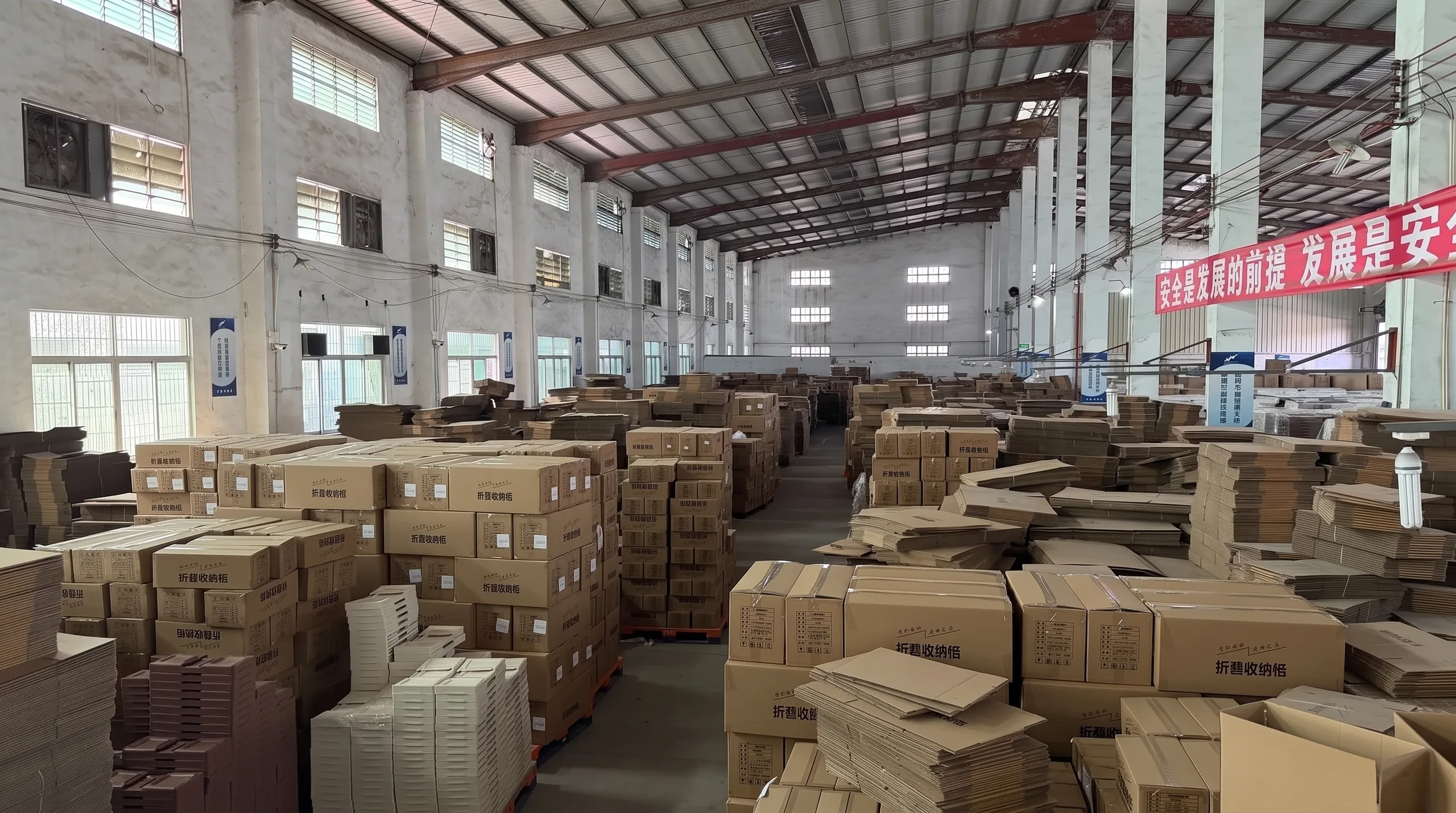
Our catalogue packs 48 of the WJD501R heater to a carton, 24 of the WJD801R, and 6 of the WJD1301R or the WJD1302R. A 600-unit order is therefore about 13 cartons on the first model and 100 on the third — the same order, an eight-fold difference in the number of cartons a sample has to be spread across. How many of them are opened is set by the sampling plan you agree with the agency, not by the order quantity alone.
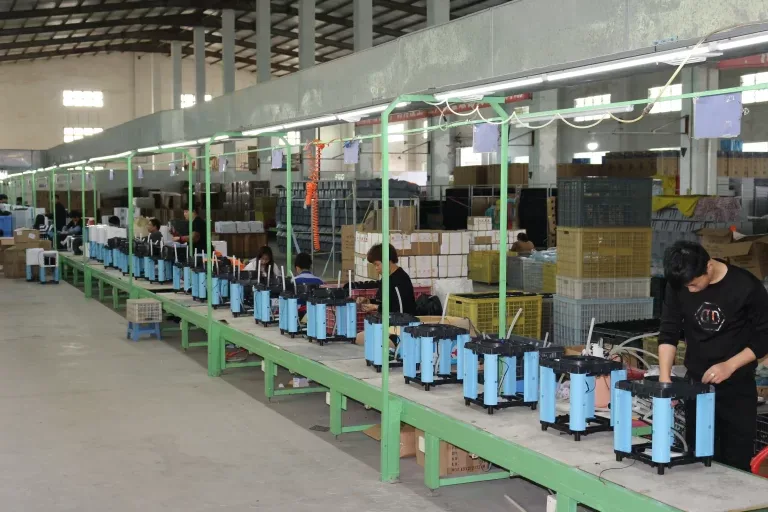
That spread is the factory's to manage: the cartons have to be set aside from different positions rather than the stack by the door, kept identifiable in groups, and closed again with the same marks once the sample has been taken, with tape and spare cartons at the bench rather than in a store room.
Confirm the packing quantity with the order. Pack configuration is confirmed per order rather than carried over from a catalogue page, and a change in carton size or quantity changes both the sample you need and the way the pallets are built.
What must be ready on the floor on the day?
Six things, and each one is worth having in writing rather than as a promise:
- The whole quantity, in the shipping state — not a finished sample and a promise about the rest.
- Rows that can be opened and re-closed — cartons sorted by version, marked, with the quantity of each version counted before the visit.
- A bench and the supply the unit is rated for, plus the accessories that travel in the carton, so a function check uses what the customer will unpack.
- The reference file — the order line for each suffix with its rated values, the approved sample and its configuration, the packing artwork and marks, and the quantity breakdown.
- The documents that reach this model and this market, with their numbers, their dates and their scope.
- Someone with authority to stop a pallet — re-packing, re-labelling and holding cartons are decisions taken that day, not after the report lands.
What happens between a failed report and the container?
The buyer releases the goods; the inspector does not. So name the disposition in the booking — hold, sort, rework, re-pack, re-label, reinspect — and name the person at your end who signs it. A visit that ends with a promise to ask the manager ends with the container waiting.
Two consequences follow. First, book the second visit into the same window as the loading date rather than after the report arrives, because the correction and the re-check share the days you have. Second, settle who pays for a repeat visit before production starts, as a term of the order: a report cannot decide it, and once the deposit is paid your leverage on it is smaller.
Keep the agency's QC inspection report in the same file as the rest of your order documents. The report is written against your brief and stays silent about everything the brief does not name, which is why the brief is the part worth getting right: what to send with a quotation request is the same discipline applied earlier in the order. What the report must carry back — identity, sample spread, severity, carton numbers — is the other half of that brief.
If a model's record still leaves its supply open, we would rather close it in writing before the visit than explain it to an inspector on the day. Send the model suffixes and the destination market through our contact page, and ask for the model and market documents that reach those models, configuration by configuration.
Filed under Quality Checks and Inspections
Back to Blog