
Pre-Shipment Inspection: What an Appliance Order's Report Should Record
Why a report saying "documents complete" cannot be signed against: how to tie each line to a model suffix, a rating and the document number that lists it, with the scope lines from our own 14 records.

A pre-shipment inspection report is a short document with a long reach. The verdict on its first page releases a container, and once the container is sealed the argument is over. What goes wrong at that moment is rarely the count. It is the identification: which model suffix, at which rating, against which document. A report can be accurate about sampling and still leave you unable to check a single line of it against the cartons in front of you.
Six items make the difference, and we would want all six on a report for a cooler order. Where our own files give an example of the problem, it sits with the item.
Why can't a pre-shipment inspection report that says "documents complete" release the container?
Because "complete" is a claim about a set, and the set is model-specific. Our record of product certification documents holds 14 records, each with its own product and model scope. Three of them show what that means in practice:
- CB test certificate CN61410, issued 19 September 2023, lists the air purification fans WJD8050A/B/C/D, WJD8060A/B and WJD8080A/B. No cooler appears on it.
- CE–EMC attestation HK2302060218E and CE–LVD attestation HK2302060063S, both dated 15 February 2023, list WJD8000F-2Z, WJD8000F-1Z, WJD8000F-1M and other listed models, and both are marked as tested-sample scope, pointing to reports HK2302060218-1ER and HK2302060063-SR.
- CB test certificate CN42744-M2, dated 20 February 2019, states "125 W evaporative air cooler; 220–240 V, 50–60 Hz", and the model appendix is not included in the scan.
An order for 4500F units cannot be released against a tick that reads "certificates: complete". One record covers a different product family, one covers a different series at tested-sample scope, and one states a rating with no model list. The same page puts it in our own words: "Model-specific records; confirm the ordered configuration and destination market", and "Issue dates are document dates, not a claim of current approval for the entire range".

Which model and rating must each line carry?
The suffix and the rating, because the cabinet is the same and the product is not. On our cooler comparison table, three models share an airflow of 4,500 m³/h, a 42 L tank and product dimensions of 500 × 410 × 960 mm:
| Model | Rated power | Electrical supply | Water tank | Product dimensions |
|---|---|---|---|---|
| WJD4500F-1D | 75 W | 24 V DC | 42 L | 500 × 410 × 960 mm |
| WJD4500F-1Z | 125 W | Not specified — confirm | 42 L | 500 × 410 × 960 mm |
| WJD4500F-2Z | 125 W | Not specified — confirm | 42 L | 500 × 410 × 960 mm |
| WJD8000F-1M | 200 W | Not specified — confirm | 80 L | 680 × 410 × 1,250 mm |
A line reading "4,500 m³/h cooler — 200 cartons" does not say which of the three it sampled, and the three do not carry the same rating. The airflow figure those models share is one operating point rather than a description of the machine, which is the whole subject of what a CFM rating measures. Write the line as the suffix and its rating — "WJD4500F-1Z, 125 W — 120 cartons" — and have the rating on the label checked against that line.
Where the units in the carton are the 125 W electronic version and the document quoted to you covers a 24 V DC model, the paperwork follows the order number while the attestation follows a different suffix. The comparison page says it plainly: do not substitute one suffix for another.
What must the quantity and carton lines add up to?
Cartons per model and per packing version, not a grand total. The WJD4500F-1D record gives a product size of 500 × 410 × 960 mm, a package of 550 × 460 × 1,020 mm, 12.6 kg net and 14.6 kg gross. WJD8000F-1M is a different stack: 680 × 410 × 1,250 mm assembled, 18 kg net and 21 kg gross, and its record separates the assembled size from its inverted-tank packing. Two models in one container are two carton populations, with different footprints, different weights and a different way up.
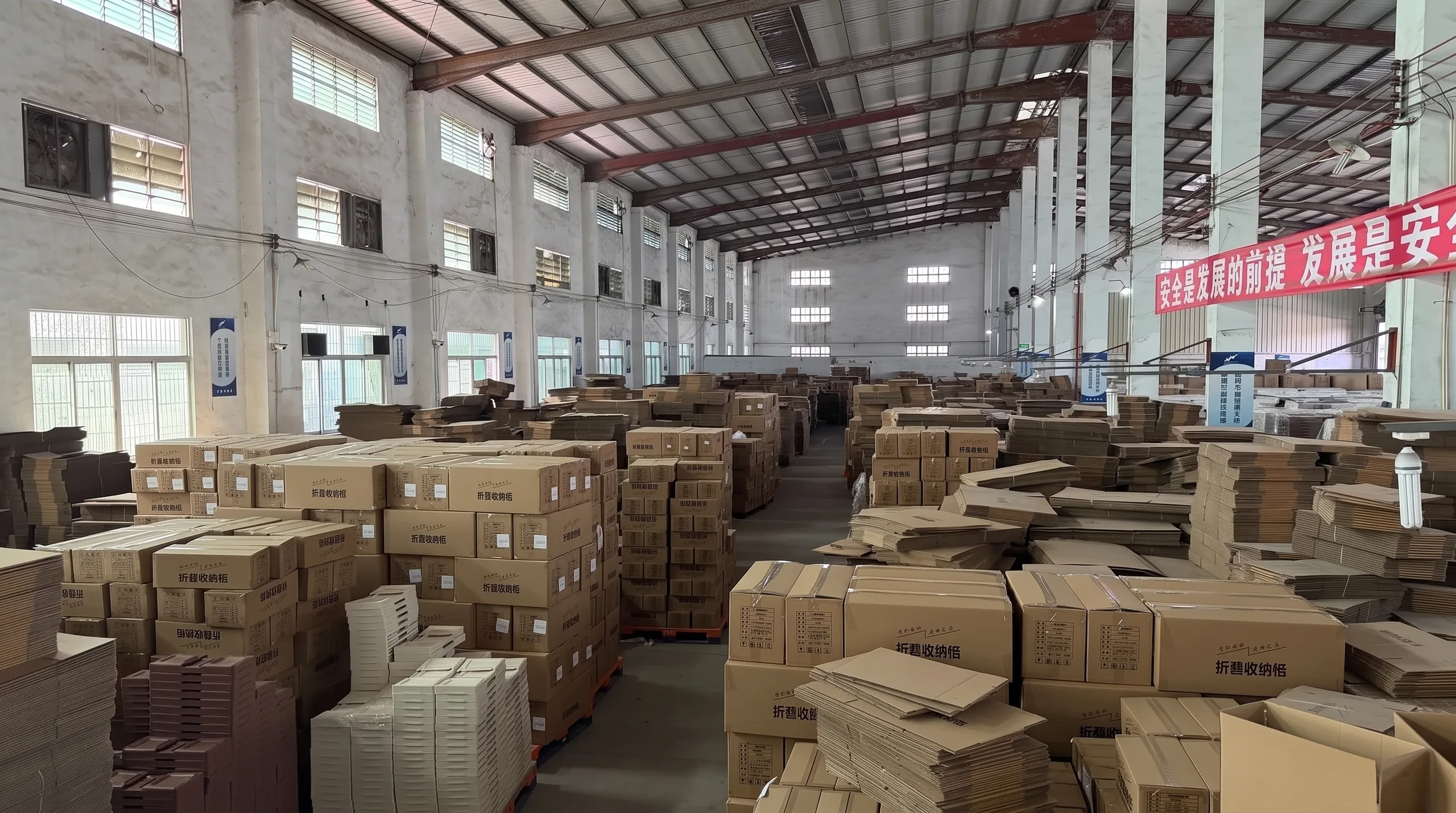
A total of 400 cartons is consistent with several different loads. The report should give, per model: units, units per carton, carton count and gross weight. For a mixed shipment, one line per model, so the sum can be checked against the packing list. Our comparison page asks for confirmed units per carton, carton dimensions and gross weight before a container load is discussed, and notes there that carton dimensions alone do not establish a guaranteed container load.
Which approved sample and which packaging version is in the carton?
The report has to name both, because they change separately. Samples are reviewed here to establish the product configuration, and production planning then covers inspection and packing requirements. A carton print, a label, a manual or a fitted accessory can move while the unit itself stays identical, and any one of those changes puts a different object under the inspector's eyes. Make the approved sample reference and the packaging revision two numbered fields on the report, not a note at the end.
Version drift is not theoretical. A tank volume published as 6 L was corrected to 5.5 L once the model records were checked, and that correction is why we ask for versions rather than descriptions: a figure carried in a catalogue, on a label and on an order sheet does not correct itself. Where an order carries your own carton print, ask in writing which artwork revision each carton was checked against, and which revision supersedes the earlier one if both are in the shipment.
Which documents did the inspector check, and against which models?
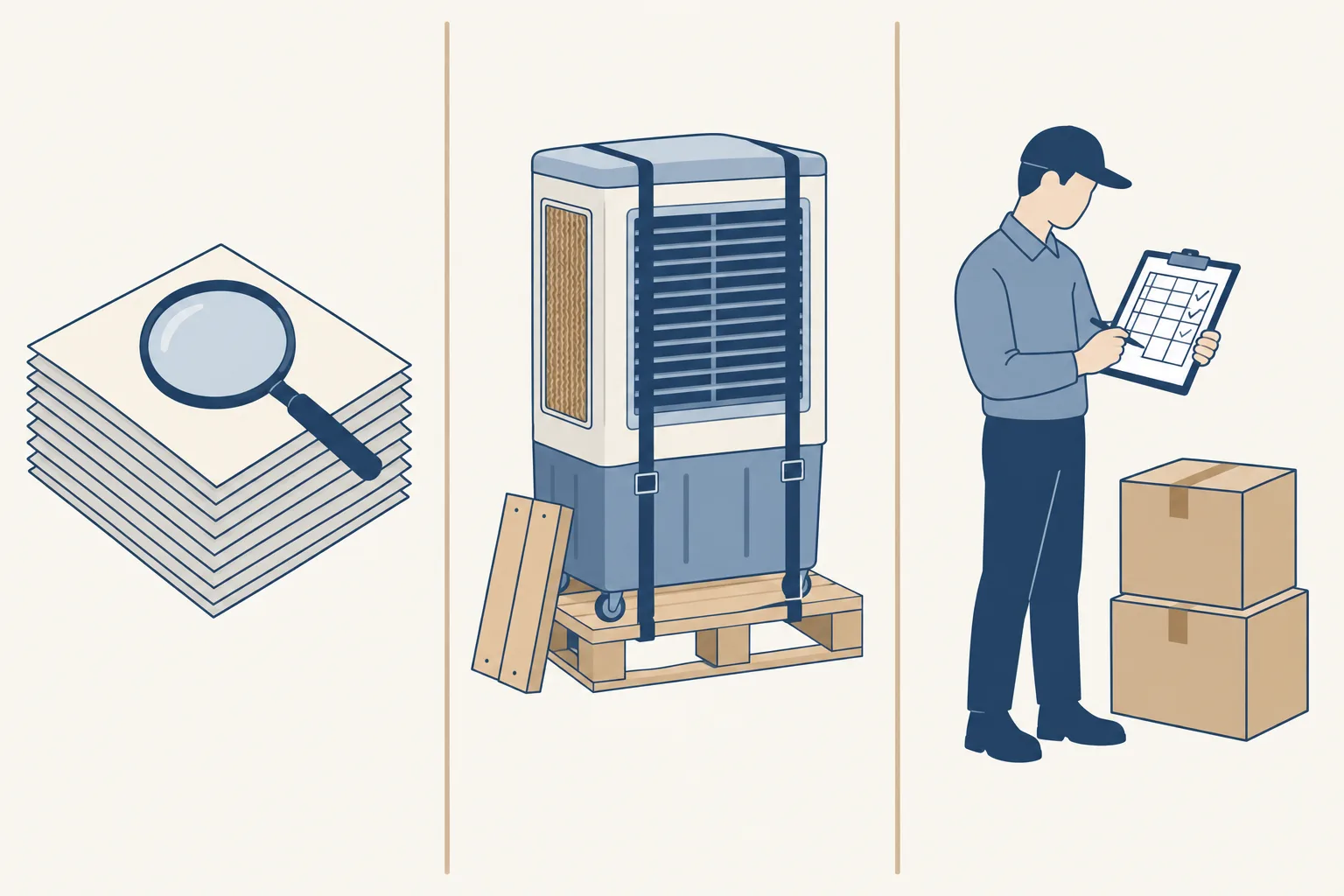
A list, not a tick. Each line wants the document type, its number, the issuer, the date, the models it lists, and the ratings it states — and whether it is a certificate, a tested-sample attestation or a translation. They are not interchangeable, and the third one least of all: our CCC record 2019010702183023 is an English reference translation issued 18 January 2024 against an original of 10 May 2019, with validity stated as 18 January 2024 to 17 January 2029, and the scan itself says the translation has no legal validity.
The buyer's check is a two-way match. Every model on the packing list should appear on at least one document line, and the rating on that line should be the rating the document states. Where a model has no document for the market you are shipping to, that is a gap to raise before the container is sealed, not after. Which documents a configuration needs depends on the model, the configuration and the destination market: confirm it with us for your order rather than assuming that a company-wide pack covers the carton.
What do the defect counts and the verdict decide?
The verdict is worth what its counting basis is worth. Three classes — critical, major and minor — each with a count, the sample size those counts came from, and the limits agreed in the order before a carton was opened. A pass written against limits agreed afterwards is not a result. Where a lot fails, the part of the report that matters is the corrective action: which cartons were sorted out, what was reworked, and when the lot is checked again.
Who signs it, and what does the buyer keep?
A named person, their organisation and role, the date and place the check was done, and the date the report was issued. A signature without a printed name is not something anyone can follow up in six months, and an undated report cannot be tied to a lot. Ask for the signed copy rather than a forwarded screenshot, and file it with the document lines above. If the check is done inside the factory instead of by a third party, the arrangements differ — booking a visit and what the factory must have ready — but the six fields do not.
What should you write into the inspection order?
The six lines, on the order rather than in a conversation, so the inspector and the factory work from one list:
- Model suffix and rated power for every line.
- Units, units per carton, carton count and gross weight for each model.
- The approved sample reference and the packaging revision.
- Every document to be checked: type, number, issuer, date, listed models and stated ratings.
- Defect counts by class, with the sample size and the agreed limits.
- The person and organisation that sign, and the date.
Send the same list with the destination market when you ask for a quotation, and the reply can name the records that apply to your configuration instead of a general assurance. A report that names the suffix, the rating, the count, the version, the document number and the signer is one you can sign, and one your buyer can check again when the container arrives.
If you would like the model list and destination market put against the records for your order, send them to our team and we will confirm which documents apply to that configuration.
Filed under Quality Checks and Inspections
Back to Blog