
Evaporative Cooler Quotation: What to Send Before You Ask
Which fields a factory can actually price from, which ones only produce a question, and the terms and documents worth putting in writing in your first message.

What should an evaporative cooler quotation request contain?
An evaporative cooler quotation is priced from a written configuration, not from a request for a price. Five lines carry almost all of it: the exact model reference, the quantity including any mix of sizes, the destination market and the documents you have to present there, the supply actually available where the unit will run, and the packing or branding you need. Whatever you leave out comes back as a question, and a question costs a round trip.
Start with the model and the market. Those are the two things our inquiry intake asks for, and a detailed technical brief is optional at first contact — the reference and the destination decide which specification records and which documents are even relevant.
Then, in the same message:
- Reference. The full model number with its suffix, or the duty and the space if you have not chosen a model yet.
- Quantity and mix. Per model, with the split if you are combining sizes.
- Market and documents. Where the goods will be cleared or sold, and what you must be able to show there.
- Supply. The voltage and frequency at the site, and how the unit will be fed.
- Packing and branding. Standard carton or your artwork, and whether you need a sample first.
Which of these fields changes the price?
Every one of them does, but not in the same way — which is why a missing line costs more than a missing detail. Each line in the left column is a field the quotation has to fill, and none of them can be filled for you.
| What you send | What it settles |
|---|---|
| Full model reference | which specification record the price is attached to |
| Quantity, and the mix if any | the volume the price is quoted at, and how the order is packed |
| Destination market | which documents are in scope and which configuration is offered |
| Site supply | how the unit is fed, and whether that arrangement has to be discussed |
| Packing, artwork, sample | what has to be approved before production is quoted |
| The terms you rely on | what the quotation has to state instead of assume |
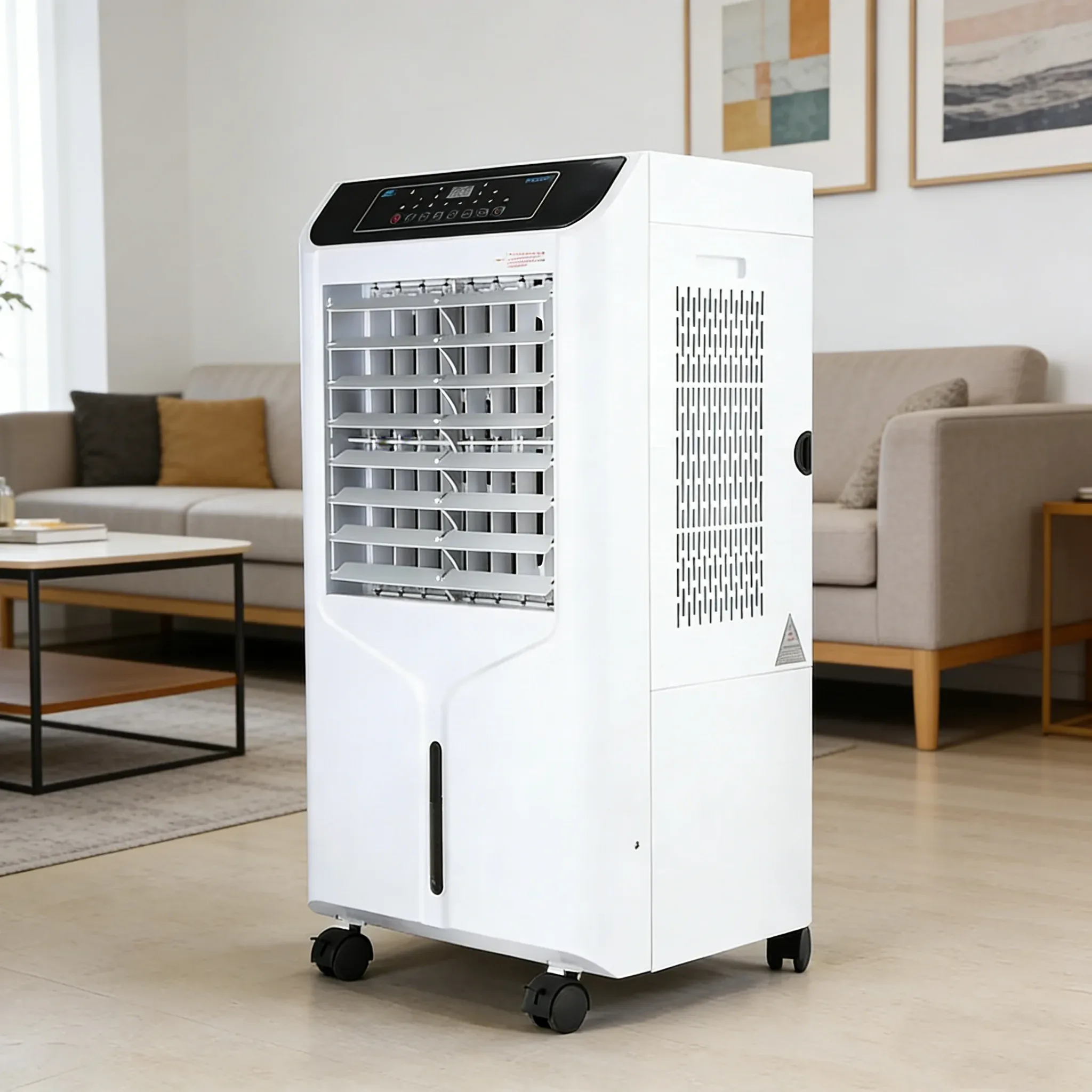
A reference that stops at the family name is the error that survives every later correction. In the current seven-model table the 42 L tank and 4,500 m³/h appear on three different suffixes, so "the 42 L model" does not identify a record you can order against. Put the confirmed specification for the exact model on the request, the sample approval and the artwork. Our correction of the tank figure to 5.5 L for three models is the case in point: the number on the paperwork has to be the confirmed one, not the rounder one from an earlier sheet.
Why doesn't a target temperature produce a quotation?
Because a target is not a configuration. "Bring this hall down to 26 °C", or a floor area in square metres, gives nothing to attach a price to: our records carry no area-based sizing rule, and the commercial guide says so plainly — floor area or tank volume cannot determine how many units a space needs. What does convert into an answer is the site as it is: a photograph or layout with the dimensions written on it, where people stand or work, where air enters and where it leaves, and the temperature and humidity you measure during the hours that matter.
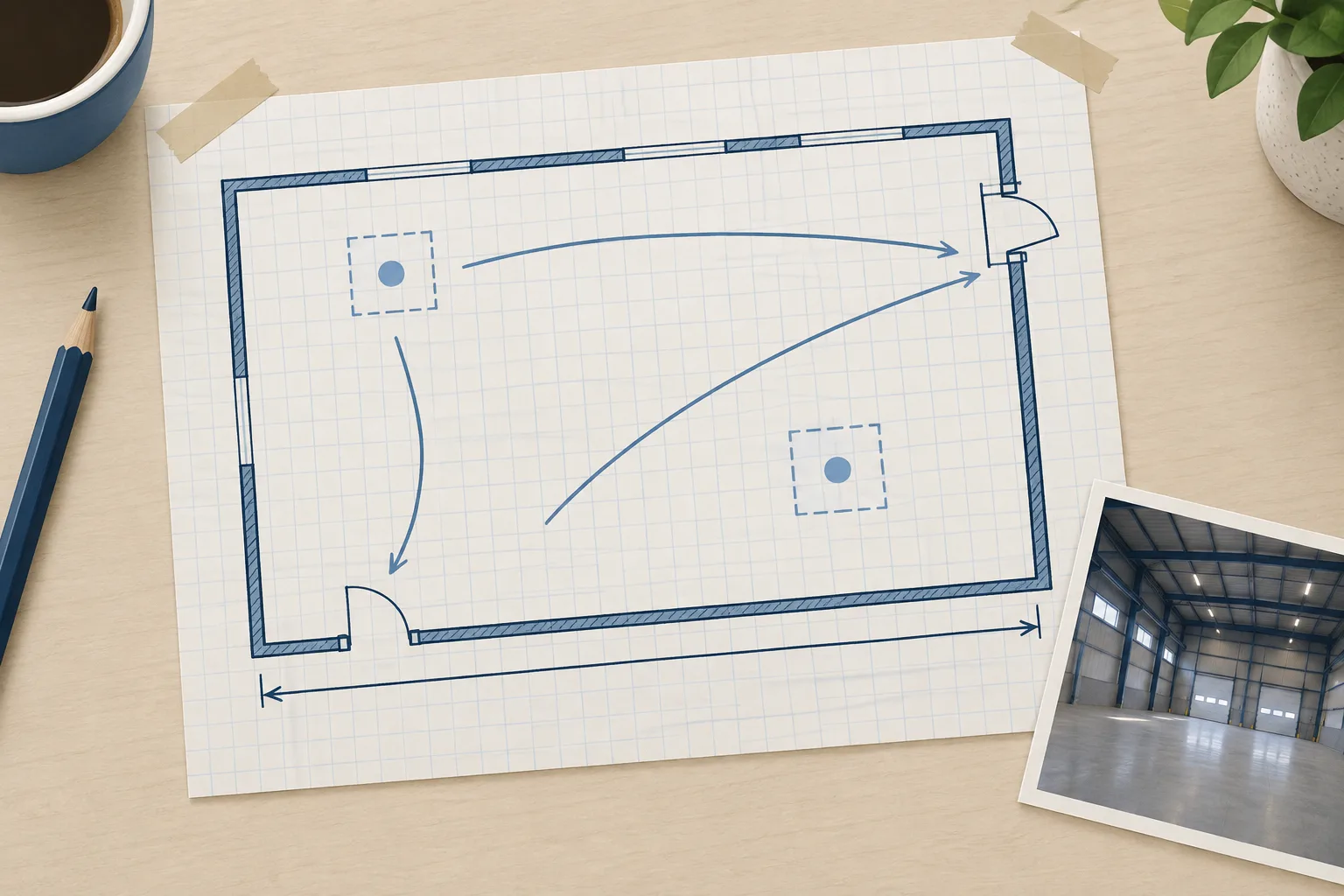
Evaporative cooling also behaves differently from a split system in a way that belongs in the brief: the unit adds moisture to the air it cools, so the result depends on the air you start with. Two rooms of the same floor area, one closed all day and one with roller doors open, are not the same request and will not come back as the same answer.
What should the supply line in the request say?
Say what the site has, then let the reply tell you how the unit is fed. Those are two different facts, and the second one is missing from most of our cooler records. On the comparison table only WJD4500F-1D is listed with a supply, at 24 V DC; the model records also give 24 V DC for WJD2800F-3D and 12 V DC for WJD880F-1D, and the remaining rows read "Not specified — confirm". A request that says only "220 V" leaves the arrangement — mains, adapter or battery — to be guessed, and a quotation built on a guess is one you have to rebuild.
If runtime matters, ask for it with its basis: at which speed setting, and for how long. The battery description for WJD4500F-1D reads 12 × 21700 cells at 4,000 mAh each. That is per-cell information, not a pack rating, and it does not turn into hours on its own. A runtime quoted without the setting it was measured at is a number you cannot plan against, whoever sends it.
Which commercial terms should be written down rather than assumed?
MOQ, sample charges and sample shipping, packing and production timing, payment structure and the trade term: none of them is fixed by a catalog page, and each is agreed for the selected configuration. Ask for all of them in the first message, so the reply gives you a total you can compare rather than a unit price you have to finish yourself. If the order is a private-label run, the changes are discussed against the selected model — logo, colour, accessories, label, manual and packaging — and a document issued for the base model does not automatically cover a modified version, so ask which ones apply to yours. The OEM/ODM route sets that conversation out step by step.
One caution, because it catches buyers who have read our older material. The commercial wording on our earlier product pages — first-order timing, TT or LC structures, free spare parts — was not carried into the current catalog as a commitment. If a term matters to your budget, put it in the request as the term you need confirmed, and treat only what comes back for your configuration as the position. A landed-cost sheet built on a line from an old page is a sheet you will have to redo.
What do you send when the point is a document?
Name the market, the exact model and configuration, and what you must be able to show. Our certificate scans are published on the About page, and they are scans: each has to be read for its number, the models it lists and its date, and a scan does not extend to a model or a market it does not name. One cooler model carries two attestations that are described as sample-scoped, which is not the same thing as approval for every configuration.

So write the document line in three parts rather than one. "Documents for our market, for the model and configuration ordered, with the number and the date of issue" is a request someone can answer. "Certificate available?" is not: it does not say which model, which scheme or which date you need, so the reply cannot close the question you opened.
What does the one-page brief look like?
Six lines, one page, one reference — then send the same file to every factory you are comparing, so the replies line up and a cheaper price means something.
- Project reference. One name, in the subject line and on every attachment.
- Requirement. Model references, or the duty and the site details if you are still open.
- Quantity. Per model, with the split across sizes.
- Market and documents. The destination, and what you must be able to show there.
- Supply. Voltage, frequency, and how the unit will be fed at the site.
- Packing, sample and terms. Carton or artwork, the sample you need approved, and the terms you want confirmed.
Send the layout photograph, drawing and artwork as separate files under the same reference, so a file can be matched to the request it belongs to. The confirmed airflow, tank and supply figures sit in the cooler model comparison, each model opens its own record — the WJD4500F-1D page carries the full parameter table — and the request itself goes through our inquiry page.
If the space is a shop, a warehouse or another working area rather than a single room, the commercial model guide is the shorter route: it screens the site first and shortlists three models with the conditions still to be confirmed. Whichever route you take, send the brief before you ask for a price. Our team can review the model, the configuration and the requirements with you before an order, and the parts that still need a decision are easier to see in one page than in five emails.
Filed under Air Cooler Selection
Back to Blog