
FCL vs LCL: Choosing How a First Cooler Order Ships
Why cooler cartons make weight irrelevant to LCL, how many units the published switching zone is, and the two totals to compare before booking.
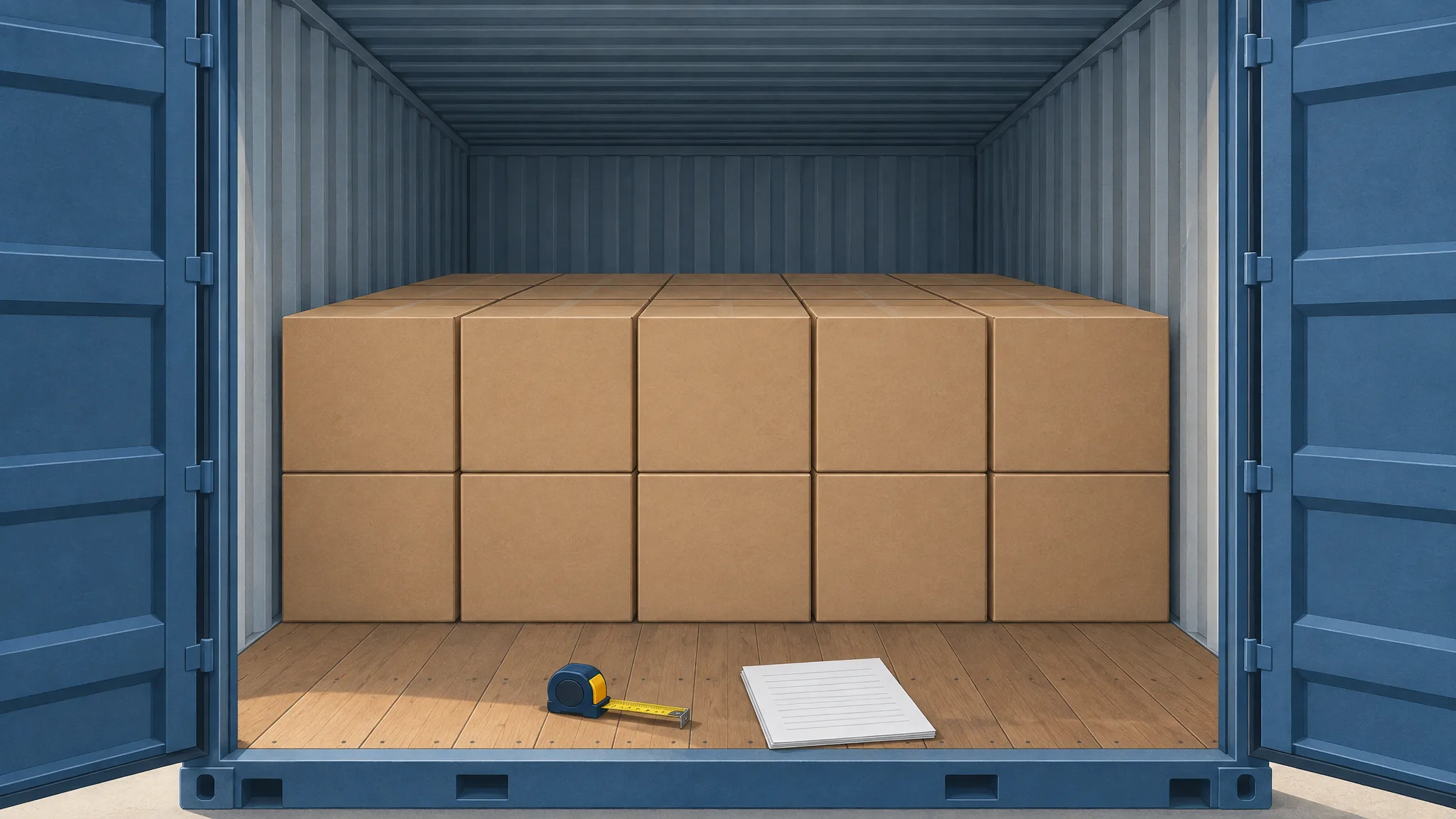
The FCL vs LCL decision on a cooler order reads like a question about how much you are shipping. On our cartons it is a question about how little weight those cubic metres carry, and that pulls the answer earlier than most buyers expect. A first order of 300 units of the WJD4500F-1D is 77.4 m³ of carton volume — more than the 76.2 m³ that Containify publishes as the cubic capacity of a 40' high cube (its container dimension table). That order was never a small consignment. It is a container decision with a shortfall inside it.
What follows is what each mode changes, why the weight side of an LCL tariff is out of reach for these cartons, how to turn a published switching zone into units, and the two totals to set side by side before you book.
What actually changes between FCL and LCL?
FCL means the container is sealed for one shipper, whether or not it is full. LCL means your cartons share a container with other shippers' cargo and are separated again at the destination, as iContainers' comparison of the two sets out. Three differences follow, and only one of them is money.
Handling comes first. An LCL shipment is consolidated at origin and deconsolidated at destination, so the cartons pass through a warehouse at each end on top of the port moves; an FCL box usually stays sealed through the main voyage. The quote basis comes second: FCL is quoted per container, while LCL is quoted on chargeable volume or weight with minimum charges and additional fees on top. The date comes third, because consolidation puts steps before departure and after arrival — which is why a buyer working to a fixed delivery window reads the routing and not only the rate.
Why can weight never decide a cooler order?
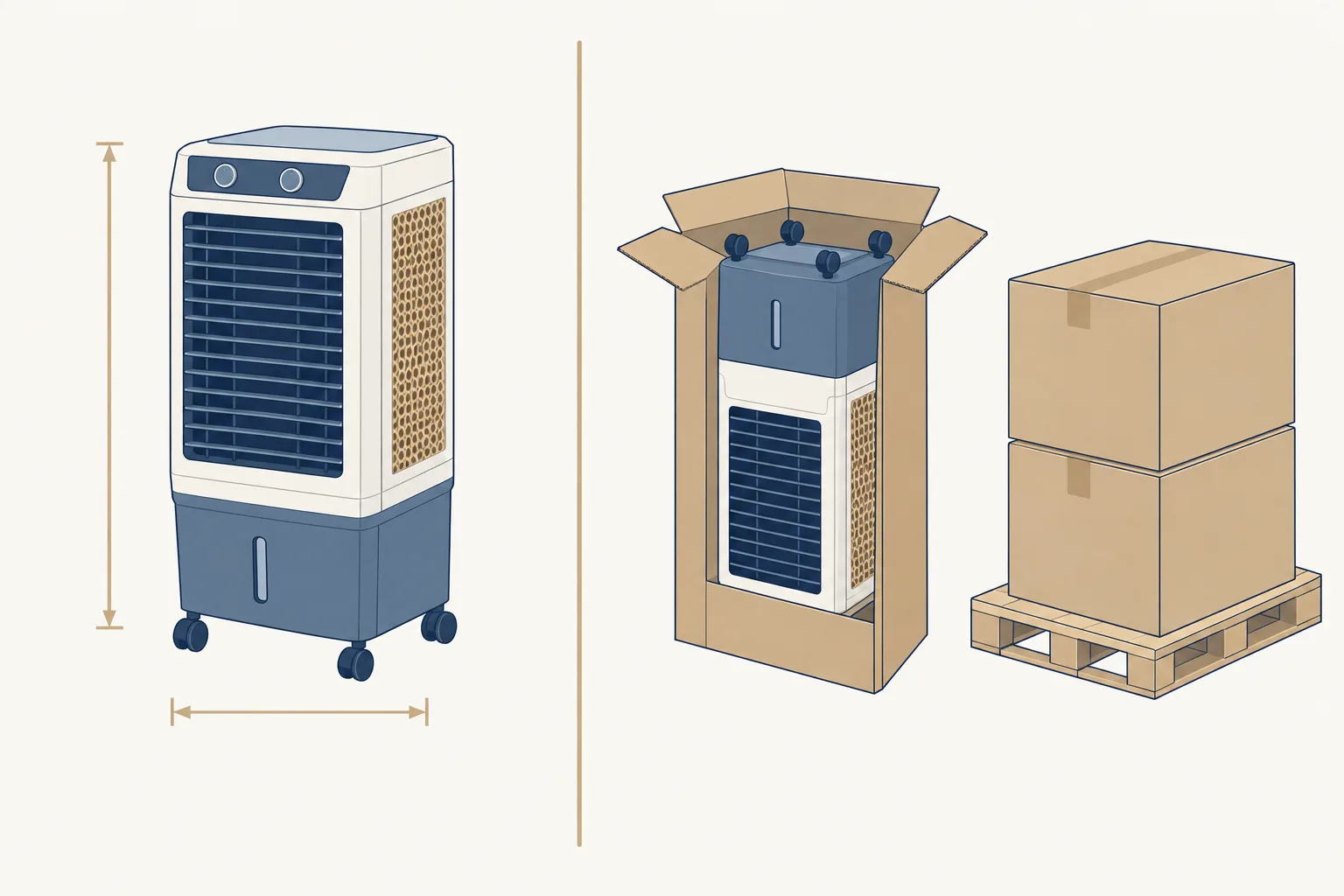
Because a cooler carton is too light for the space it fills. The WJD4500F-1D ships in a 550 × 460 × 1,020 mm carton — 0.258 m³ — at 14.6 kg gross, which is about 57 kg per cubic metre. On a tariff that treats a cubic metre and a tonne as one chargeable unit, these cartons need about 17.7 m³ to reach a tonne, and 17.7 m³ is more than half of the 33.0 m³ the same published table gives a 20' high cube. The 80 L WJD8000F-1M is denser at about 67 kg per cubic metre and reaches a tonne in about 15 m³ — nearly half a container for one tonne of goods.
The container side reaches the same conclusion from the other end. A 40' high cube has a published cargo allowance of 26,580 kg and 76.2 m³ of capacity. At 14.6 kg a carton it would take about 1,820 cartons to approach that allowance, and those cartons occupy roughly 470 m³ — more than six containers' worth of volume. A 40' high cube filled to its own published cube holds 295 of these cartons at most, about 4.3 t of cargo. On this product the payload never binds; the space does.
A comparison built on weight therefore has nothing to bite on, and a rule of thumb about tonnage tells you nothing about a cooler order. What decides is the volume your cartons take and the charges the LCL side adds around it.
How many coolers is the published switching zone?
About fifty. Forwarders publish the zone in cubic metres rather than in units. Savino Del Bene puts LCL at 2 to 13 m³ and FCL above 13 m³, with the caveat that the rule has exceptions (its FCL and LCL explainer). iContainers goes further: there is no universal cubic-metre threshold, and the familiar "switch at 15 m³" rule can overlook destination charges. Turned into the 42 L carton, 13 m³ is 50 cartons and 15 m³ is 58 — so the published switching point arrives at around fifty units, not a few hundred.
Some forwarders use a pallet count instead. Trade Risk Guaranty, an insurance broker writing for importers, has said that FCL tends to be cheaper once a shipment passes about ten standard pallets (its 2021 comparison). A pallet rule needs a pallet count, and how many cartons a pallet carries depends on the packing agreed for the order — which is why we work in cartons and cubic metres and agree the pallet plan order by order.
| Order of WJD4500F-1D cartons | Carton volume | Share of a 20' high cube (33.0 m³) | Share of a 40' high cube (76.2 m³) |
|---|---|---|---|
| 50 | 12.9 m³ | 39% | 17% |
| 100 | 25.8 m³ | 78% | 34% |
| 200 | 51.6 m³ | 156% | 68% |
| 300 | 77.4 m³ | 235% | 102% |
Read the table as carton volume, not as a loading plan: it says how much space your order fills, and a container is filled by a plan rather than by arithmetic. A percentage over 100 means the cartons' volume alone exceeds the named container, so the order needs more than one box or a split shipment. The shape of the answer is visible anyway. A hundred units is 25.8 m³, 78% of a 20' high cube. Two hundred is 51.6 m³, two thirds of a 40' high cube. From about fifty units upward the question stops being whether you can afford a container and becomes which container, and what happens to the space you are not using.
How do you find the crossover on your own order?
With two totals and one division. Ask your forwarder for both options on the same scope — collection, origin handling and documentation, ocean freight, destination handling and release, delivery, and whatever is excluded — then write the LCL total as a block of charges that does not move with volume plus a rate per cubic metre. The block is where the minimum charge, the documentation and both warehouse handlings sit. The break-even volume is the FCL total minus that block, divided by the rate per cubic metre; divide again by the carton volume, 0.258 for the 42 L model or that model's own figure, and you have the count in cartons. Below it the LCL total is the smaller one; above it, the container is.
Two cautions from the same pages. Non-stackable cargo and special handling move the LCL figure, so ask whether the service treats a 1.02 m carton as stackable, whether it wants loose cartons or palletised ones, and what it charges if the answer changes the handling. And volume does not prove the cargo fits: door clearance, stacking and the loading plan still have to be checked.
If the break-even count lands close to the quantity you want, get both totals in writing and keep the scope identical on each — that is the only way the division means anything.
What changes when the container is not full?
The container is still yours, and it still has to be secured. FCL does not require you to fill the box, and a partly filled container needs a loading plan that stops the cargo moving into the empty space; delivery differs too, because a container has to go to an address that can take it and unload it, while LCL cargo is released as individual packages or pallets after deconsolidation. A warehouse without a dock can turn that into the deciding difference.
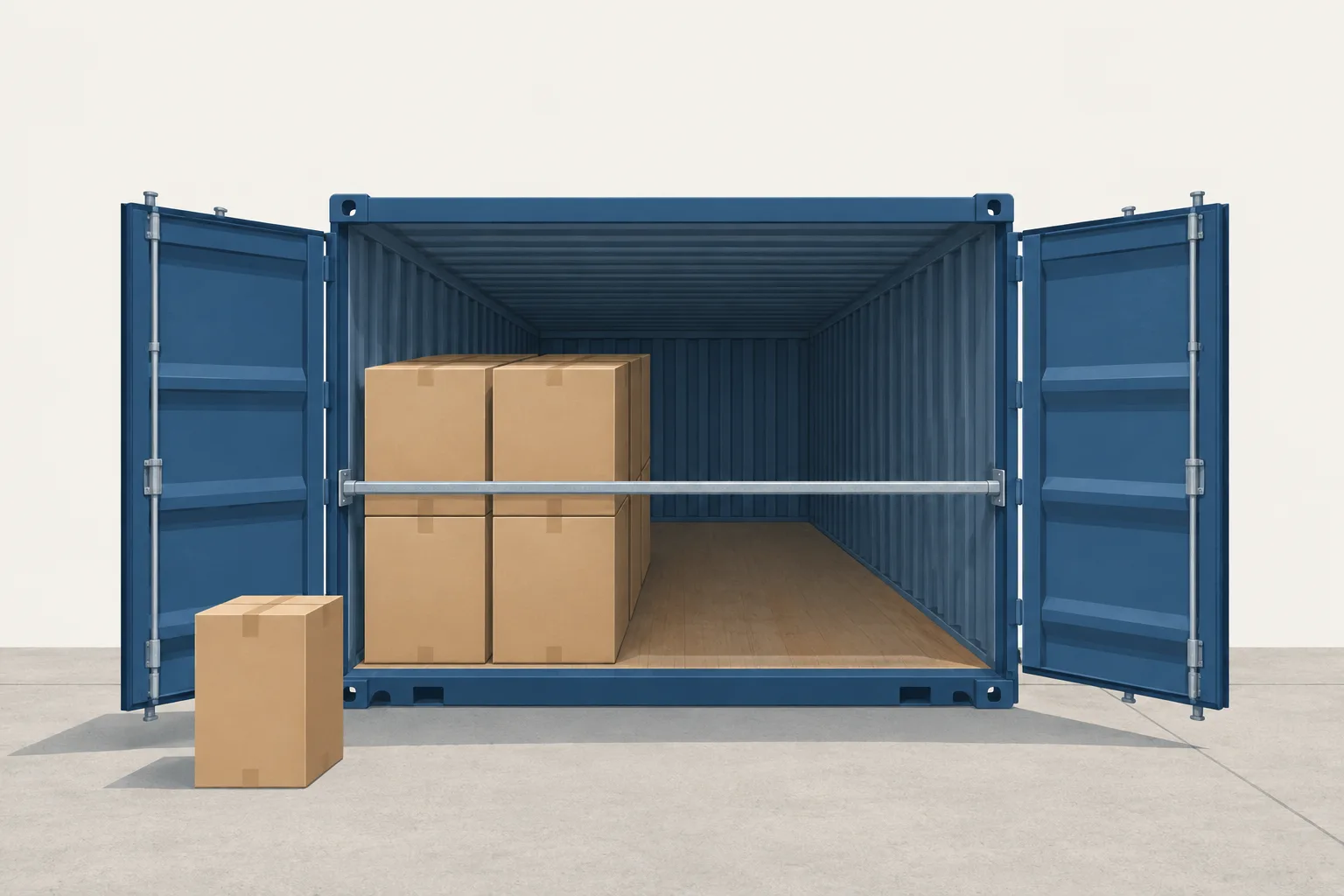
For coolers, empty space is the normal case. Two tiers of a 1.02 m carton inside a 40' high cube leave about 0.6 m of height over the load and the last stretch of floor clear, and the loading plan is written around that. What we owe you is the carton count and the packing version the count belongs to; what your forwarder owes you is a plan that keeps a part-load from moving.
What should you fix before you book either one?
Five things, all of them settled before the forwarder prices anything.
- The packing version the volume was calculated on. Our cartons change with branding and accessories, and a changed carton is a changed volume — the same figures decide how a CIF price splits across models.
- The pallet plan, if your forwarder quotes by pallet. Ask us for it rather than counting cartons from a photograph, because the count follows the packing agreed for the order.
- The model list with suffixes and quantities. A mixed order has a different carton volume for each model, so one average figure misprices the rest.
- The loading quantity. We confirm it with the order rather than publish a standard figure, together with the carton dimensions and gross weights the freight is calculated from.
- The carton marks and the unloading arrangement at your end. A container delivery needs access that a shared-load delivery does not.
Send those five, ask for both totals on the same scope, and the choice becomes arithmetic: your carton count against the break-even count. The packing record and the loading quantity come from us, and the request goes through our inquiry page. Make it one written request, and include the rest of what a factory quotation is priced from in the same message — the reference with its suffix, the mix of sizes, the market and the documents you have to present, the supply at the site, and the packing or branding you need — so the pack we send back matches the order you are shipping.
Filed under Container Loading
Back to Blog