
Appliance Development Schedule: What Sets the Date From Brief to Shipment
Four approvals shape the date: requirements, design revision, sample and packing. What each step needs from you, and how timing is agreed for your configuration.

An appliance development schedule is not a number of weeks we keep in a drawer. On our projects the calendar runs through four steps — requirements, design and prototype, sample review, and production planning — and each of them asks something of your side before it can move: a requirement, a revision decision, a sample approval, a packaging and order confirmation. That is why no standing schedule is published: sample terms and the development or production schedule are agreed for each project, as the four steps on our OEM/ODM page set out.
If the request that starts those steps is still being assembled, the quotation brief is the shorter read. What follows is about the weeks after it lands.
What does the appliance development schedule count from?
The four steps are fixed; how long each takes depends on the project, which is why the schedule is agreed for your configuration rather than quoted as a general period.
Requirements, design and prototype, sample review and production planning are the sequence on that page, and the page also lists what each step asks of you. Step one asks for a model or design reference, the destination market, the expected quantity and the requested changes, plus any test or document you have to be able to show. Those are the fields our project brief collects, and they are the ones that give step two something concrete to work from.
Which decisions set the date?
Four, and each one ends with a decision recorded in the project.
| Step | What you bring | What we do with it | What still needs your confirmation |
|---|---|---|---|
| Requirements | Model or design reference, destination market, expected quantity, requested changes, tests or documents you must be able to show | We define the product, the market and the requested customization | The scope as written, including the questions it leaves open |
| Design and prototype | Your comments on the proposed design, in one numbered list | We review the design and prototype and record each change against a design revision | The revision the sample is made from |
| Sample review | Your check against the agreed dimensions, appearance, functions and acceptance criteria, with the changes you want listed | We check the sample and record the changes before approval | Approval of the sample |
| Production planning | Artwork, the packaging specification, quantity and the order arrangements | We confirm the approved sample, the specification, the packaging and the order arrangements | The packaging specification and the order terms |
The last column is the part that depends on your side. A change requested after a decision has been recorded is assessed for its effect on tooling, testing, price and timing before the next step is fixed. That is why we ask for changes as a numbered list held against a design revision: the list is what the next version is checked against.
What does an existing model give you that a new design does not?
It gives the first two steps their facts.
Existing-model customization starts from a selected model and the branding or supply changes proposed for it; new-product development adds a brief for appearance, functions, tooling and materials, with feasibility and sample acceptance reviewed for that project. The practical difference is what step one has to settle before step two can begin.
On a catalogued model most of that settlement is already written down. WJD4500F-1D is listed at 24 V DC and 75 W, with six speeds, 4,500 m³/h airflow and a 42 L tank, a product size of 500 × 410 × 960 mm, a package of 550 × 460 × 1,020 mm, and labelled net and gross weights of 12.6 kg and 14.6 kg. The model record is then something to brand — colour, logo, label, manual and packaging are changes made against known values rather than values still to be established.
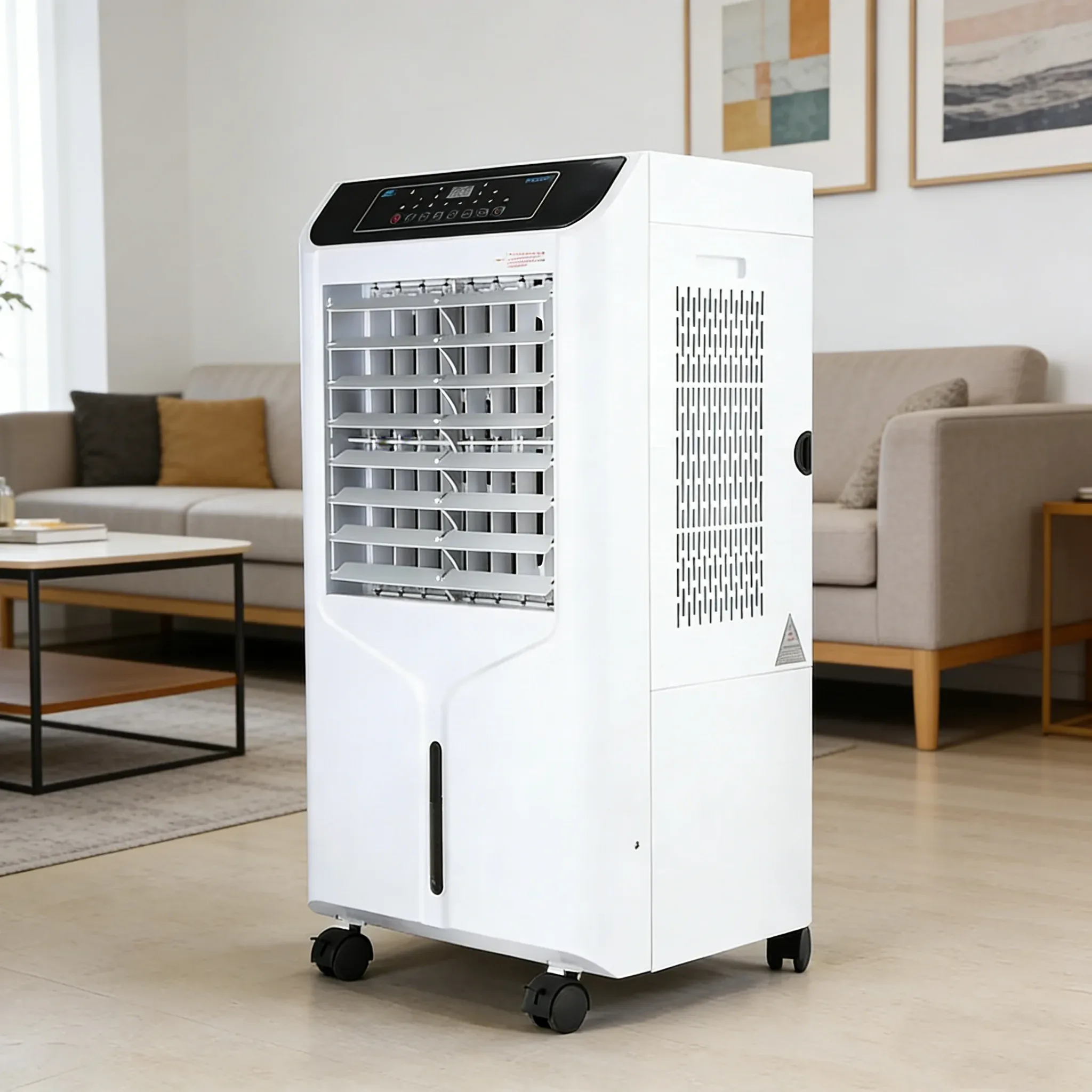
The suffix, not the family, is what a change is made against. In the same 4500F comparison, at the same product size and the same 42 L tank, one suffix is listed at 24 V DC while another's supply field still reads "not specified — confirm". A brief that begins "the 42 L model" leaves step one open, and the label, manual and carton that follow print whatever the exact suffix carries.
When does a document request become a schedule item?
At step one, because that is where the destination market is named and where we learn which records are relevant.
Our records are issued per model and configuration. The scans published on our About page are read the same way: each has to be read for the models it lists, and an existing scan does not automatically cover a changed design — additional testing and inspection are agreed for the project and checked against records naming the exact model, electrical configuration and destination market.
So put the document line in the brief rather than in the follow-up: which market, which model or configuration, and what you must be able to show there. A document request that arrives after sample approval is assessed like any other change, for its effect on tooling, testing, price and timing.
What does a change after approval cost?
It is assessed before it is accepted, together with what it does to the next step.
The sample is checked against the agreed dimensions, appearance, functions and acceptance criteria, and the changes you want are recorded before approval. A colour or label change touches the appearance that check was made against; a packaging change touches the specification confirmed in production planning. Both are re-assessed — tooling, testing, price and timing — rather than carried into the run unexamined.
Packing figures are their own fields in the record: 550 × 460 × 1,020 mm at 14.6 kg gross, against a unit of 500 × 410 × 960 mm at 12.6 kg net. Because the packaging specification is confirmed in step four, and packed size and gross weight are what a shipment is calculated from, artwork belongs with the order arrangements rather than with the carton supplier's own deadline.
Every figure printed on that artwork also has to be the confirmed one for the exact model. Our correction of a tank figure to 5.5 L for three models reads the same way from the buyer's side: the number carried into the order specification and the packaging artwork has to be the confirmed one, not the rounder one from an earlier sheet.
What date can you give your own team?
Count back one step at a time, and put your own dates on the steps that wait on you.
Start from the day the goods have to be on sale or in your customer's warehouse. Take off the freight, take off the production slot agreed for your configuration, and you reach production planning — which waits on the approved sample, the specification, the packaging and the order arrangements from your side. Each of those is a date you hold, not one we can assign.
The commercial side says the same thing. Sample availability and charges, tooling or artwork costs, production lead time and delivery arrangements are requested in the quotation and confirmed for the selected configuration, so the numbers you pass to your own team are the ones in that reply rather than a period carried over from another project.
If the dates do not fit, the honest conversation is about scope or about the launch date. A plan built on an instant answer at every step leaves no margin — and a late change still has to be assessed for what it does to tooling, testing, price and timing before the date moves with it.
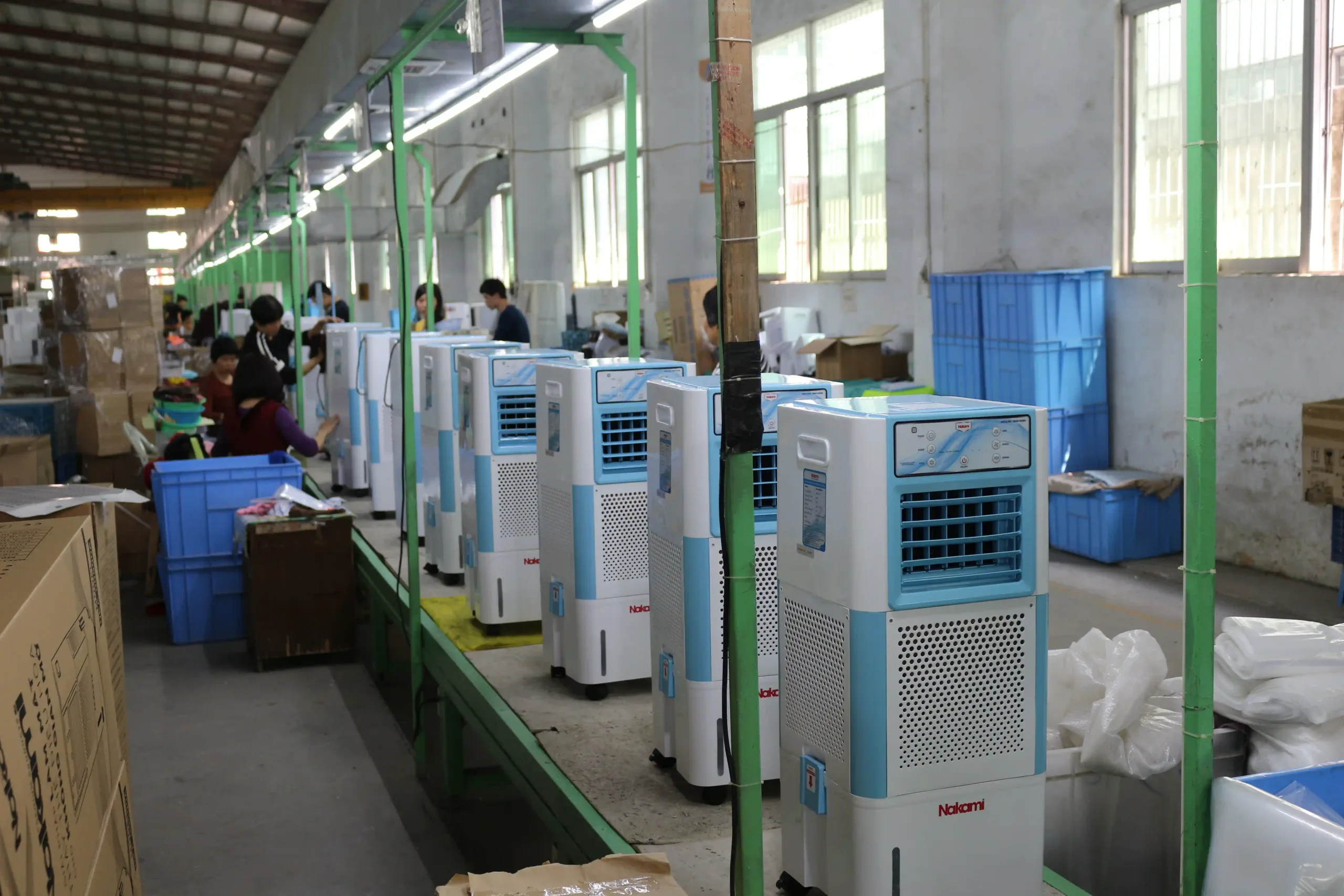
Bring the model or concept reference, the destination market, the change list and the expected quantity to our team, and the four steps can be assessed together with the terms for your configuration — sample charges, tooling and artwork costs, and the timing that goes with them.
Filed under OEM & ODM
Back to Blog