PT
PT  EN
EN  ZH
ZH  FR
FR  DE
DE  RU
RU  ES
ES  AR
AR  JA
JA 
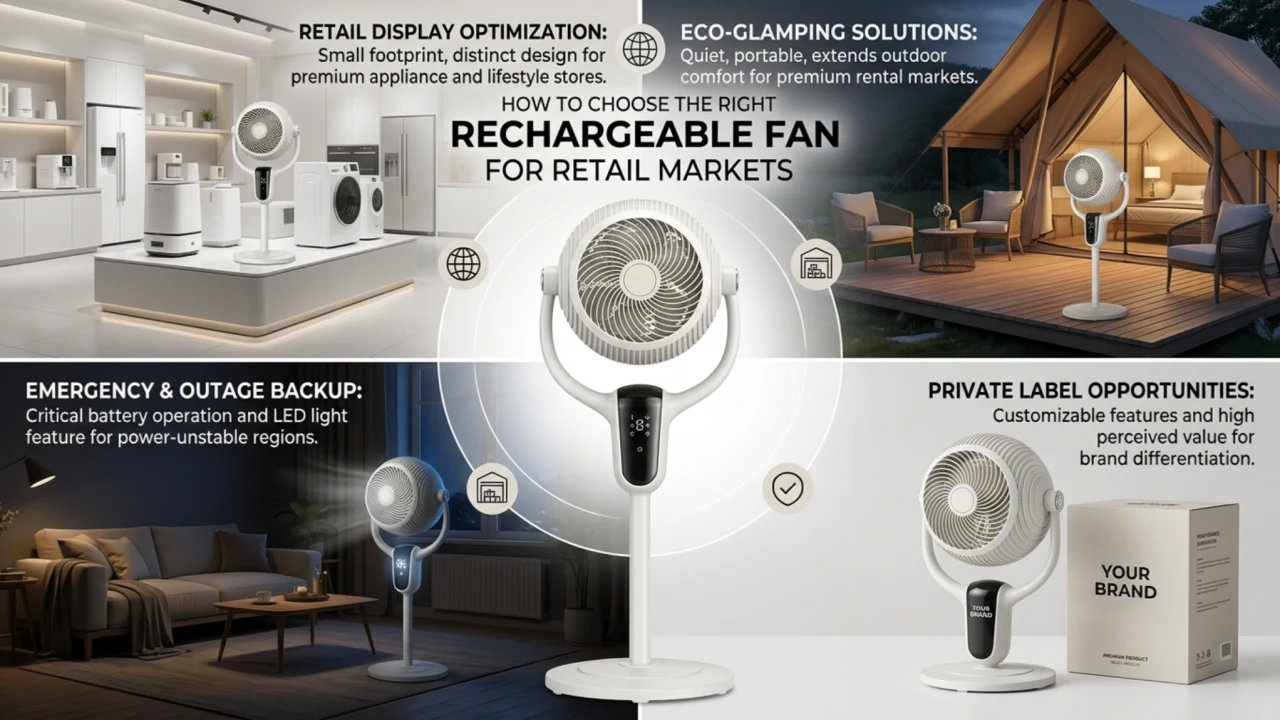
Rechargeable fans are becoming an increasingly flexible product category for retailers, distributors, importers, and private-label brands. Unlike traditional corded fans, rechargeable models can serve customers who need cooling during power outages, outdoor activities, travel, camping, or locations where access to mains electricity is limited.
But more product features do not automatically mean better retail performance.
For B2B buyers, the key is to choose a rechargeable fan that matches the target market, customer needs, retail price, and sales channel.
So, how should retailers choose the right rechargeable fan?
The most effective approach is to evaluate the product from six perspectives:
Market → Customer → Application → Configuration → Price → Supplier
1. Start With the Target Retail Market
Before selecting a fan model, identify who will actually buy it.
A rechargeable fan for a supermarket chain may have completely different requirements from a premium outdoor brand.
Common retail targets include:
- General household consumers
- Outdoor and camping customers
- Power-outage markets
- Electronics retailers
- Home appliance distributors
- E-commerce brands
- Hardware and convenience stores
- Hospitality and commercial customers
The first product decision should therefore be based on the market rather than the factory’s existing SKU list.
Household Retail
Household customers usually look for:
- Reliable airflow
- Easy operation
- Reasonable battery life
- Low noise
- Competitive price
- Attractive appearance
A balanced configuration can usually be more commercially attractive than an oversized battery and excessive features.
Outdoor and Camping Retail
Outdoor customers place greater emphasis on:
- Battery runtime
- Portability
- Cordless operation
- Carregamento por USB
- Durability
- Flexible positioning
For this segment, battery capacity becomes a stronger selling point.
Power-Outage Markets
Where electricity interruptions are common, rechargeable fans can be positioned as backup cooling products.
Retail buyers should focus on:
- Longer battery runtime
- Battery reliability
- Charging convenience
- Clear power specifications
- Safety protection
- Forte fluxo de ar
The market opportunity is particularly relevant for regions where consumers need cooling without continuous access to mains power. Current B2B sourcing discussions identify power outages, heat, and portable cooling needs as important drivers for rechargeable fan demand.
2. Choose the Right Fan Type
“Rechargeable fan” is a broad category.
Retail buyers can choose from:
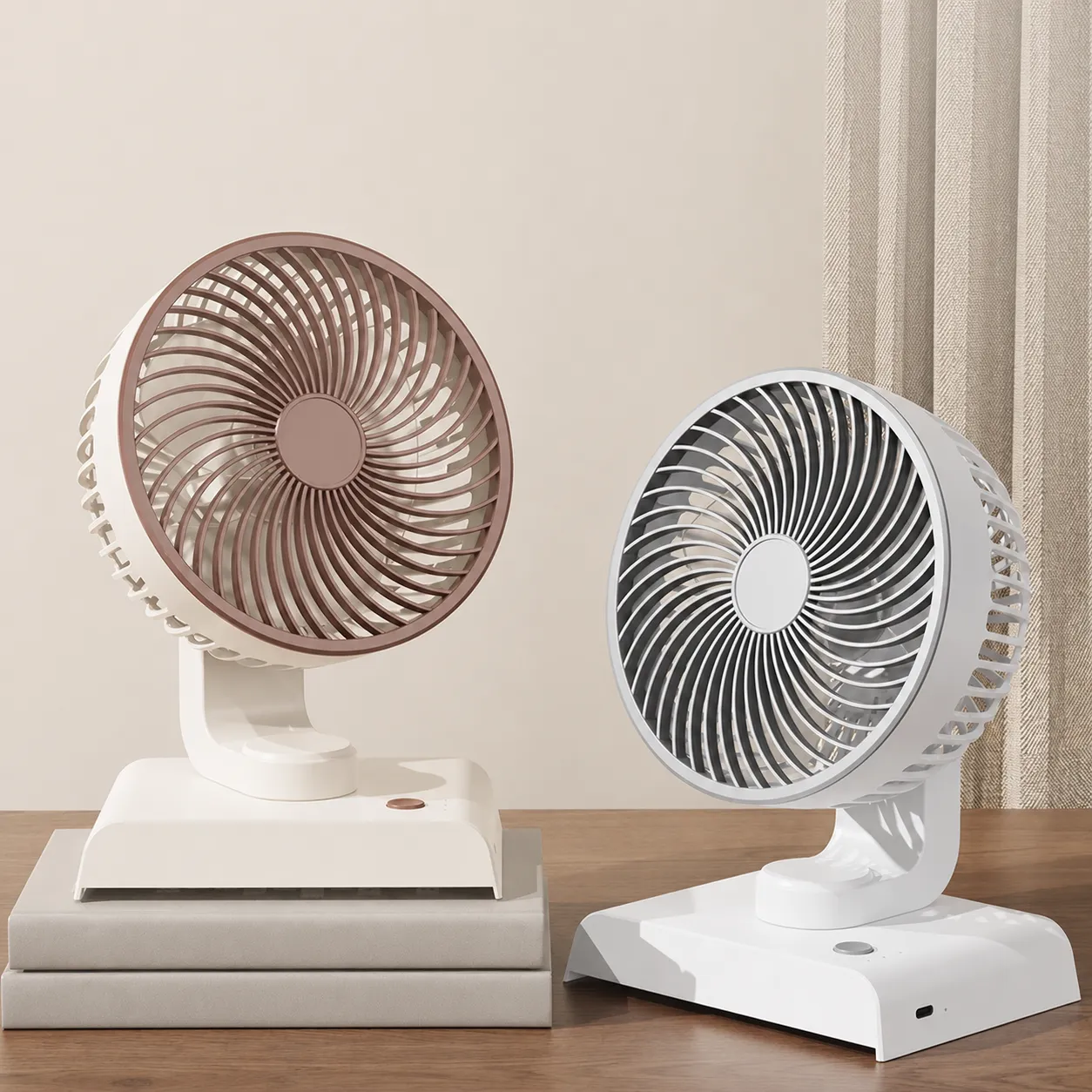
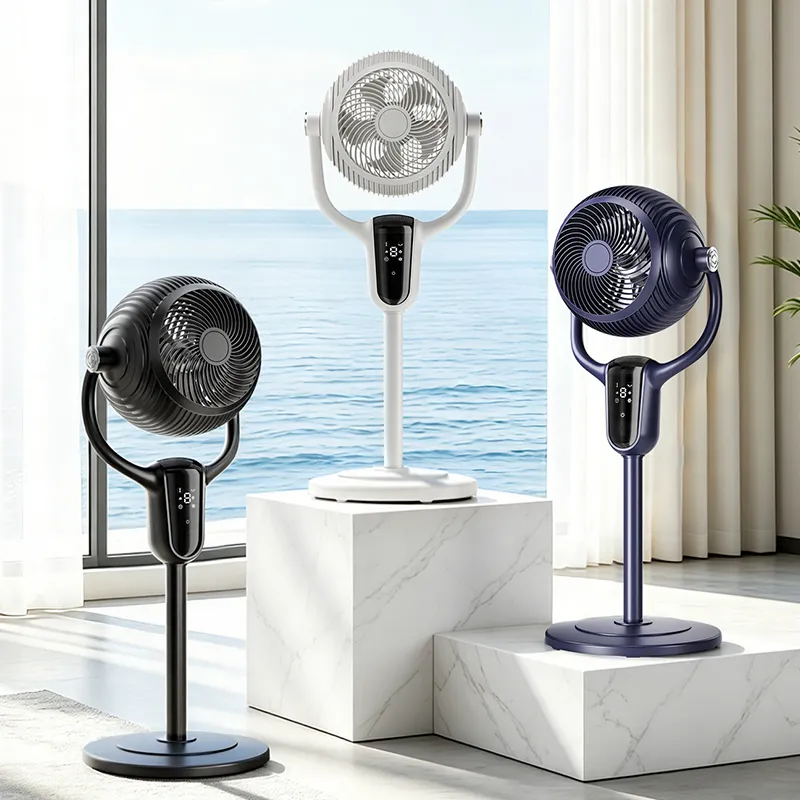
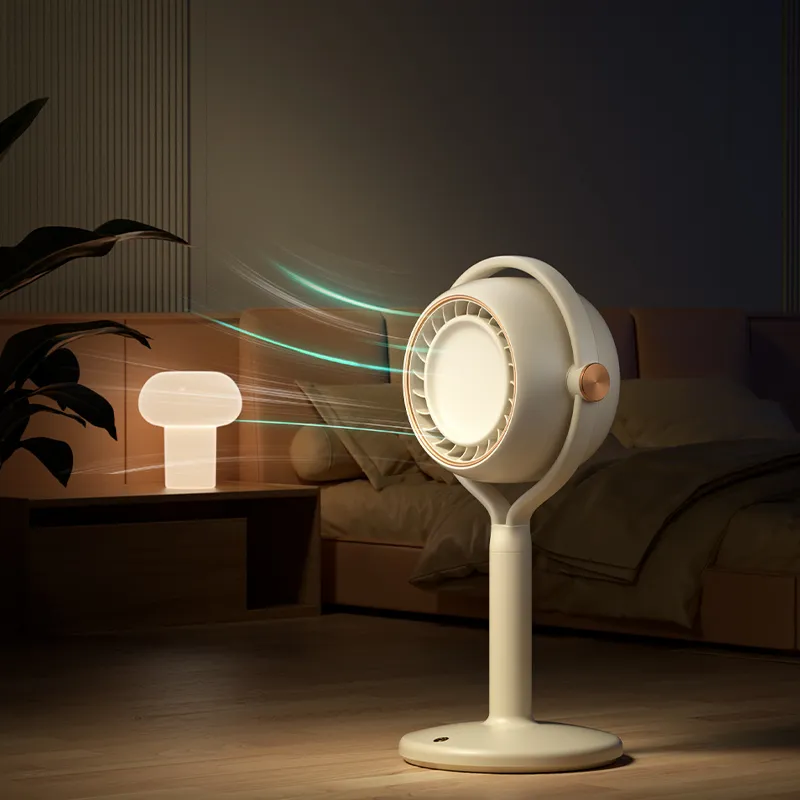
- Rechargeable standing fans
- Ventoinhas portáteis
- Table fans
- Desk fans
- Camping fans
- Clip-on fans
- Handheld fans
The right type depends on the customer’s expected use.
For example, a handheld fan may be suitable for personal cooling, but it cannot provide the same room-level airflow as a standing fan.
A rechargeable standing fan can therefore occupy a different retail position because it combines cordless operation with broader airflow coverage.
For home appliance retailers and distributors, this makes rechargeable standing fans particularly useful as a higher-value alternative to small personal fans.

3. Evaluate Battery Capacity Based on Customer Needs
Battery capacity should be selected according to the intended use rather than simply choosing the highest mAh specification.
A general framework is:
| Target Market | Suggested Positioning | Battery Priority |
|---|---|---|
| Budget household | Affordable rechargeable fan | Basic to mid-range |
| General retail | Balanced performance | Mid-range |
| Outdoor/camping | Extended cordless use | Higher capacity |
| Power-outage market | Backup cooling | Higher capacity |
| Premium private label | Feature-rich product | High-capacity + efficient motor |
The actual runtime should always be checked against the battery capacity.
Two fans with similar mAh ratings may deliver different operating times because of differences in motor efficiency, rated power, fan speed, and control systems.
Industry buyer guides similarly recommend evaluating battery capacity together with runtime and use scenario rather than treating mAh as the only performance indicator.
4. Look at the Motor, Not Just the Battery
Motor technology is one of the most important specifications for a rechargeable fan.
A battery-powered product needs efficient energy management because every watt consumed reduces available runtime.
For this reason, buyers developing higher-value retail products should consider BLDC motors.
BLDC motors can support efficient operation and low-noise positioning, making them useful for premium rechargeable fan products.
When evaluating suppliers, compare:
- Tipo de motor
- Rated power
- Fluxo de ar
- Nível de ruído
- Speed control
- Expected service life
- Power consumption
Do not assume that a larger battery can compensate for inefficient motor performance.
5. Select Features That Have Retail Value
More features do not always increase sell-through.
The best features are those that customers can understand quickly and that solve a real problem.
Useful features for rechargeable standing fans can include:
Várias definições de velocidade
Multiple speed levels allow users to adjust airflow according to different conditions.
For retailers, “9-speed adjustment” can also provide a stronger product specification than a basic three-speed model.
USB Output
USB output can turn a rechargeable fan into an emergency power source for small electronic devices.
This can strengthen the product’s value proposition for outdoor and backup-use markets.
Quiet Operation
Low-noise performance can make a rechargeable fan more suitable for:
- Quartos de dormir
- Escritórios
- Study areas
- Hospitality environments
Oscillation
Oscillation helps distribute airflow across a wider area and can make a standing fan more suitable for room-level cooling.
Adjustable Height and Angle
Flexible positioning improves usability and gives retailers another practical selling point.
The important principle is:
Select features that support the target customer’s buying decision, not features simply added to increase the specification list.
6. Build a Retail SKU Strategy
One of the most important decisions for a retailer is whether to sell one configuration or multiple SKUs.
For example, a private-label brand could develop:
SKU A — Standard
- Rechargeable operation
- Balanced battery capacity
- Basic feature set
- Competitive retail price
Target: mass-market consumers
SKU B — Extended Runtime
- Larger battery
- BLDC motor
- Multiple speed settings
- USB output
Target: families, outdoor users, power-outage markets
SKU C — Premium
- Higher-capacity battery
- Efficient BLDC motor
- Advanced control
- Premium appearance
- Customized packaging
Target: premium home appliance and lifestyle brands
This approach allows a brand to cover several price levels without completely rebuilding its product portfolio.
7. Consider Retail Price Before Finalizing the Configuration
A common mistake is choosing product specifications first and calculating the retail price afterward.
For private-label products, the process should be reversed.
Start with:
Target Retail Price
↓
Target Gross Margin
↓
Target Product Cost
↓
Required Product Configuration
↓
Battery + Motor + Features + Packaging
This approach helps prevent over-engineering.
For example, if a retailer targets a highly price-sensitive market, a 12,000mAh battery, advanced controls, premium packaging, and multiple additional functions may push the product beyond the acceptable retail price.
A simpler configuration may actually have better market potential.
8. Check the Supplier’s OEM/ODM Capability
For B2B buyers, choosing the product is only part of the sourcing process.
The supplier also needs to support the commercial requirements of the project.
Before placing a bulk order, ask:
- Can the supplier customize the logo?
- Can colors be customized?
- Can retail packaging be customized?
- Can battery capacity be adjusted?
- Can functions be modified?
- Can the supplier provide samples?
- What is the MOQ?
- What is the production lead time?
- What certifications are available?
- Can the supplier support different markets?
For private-label brands, OEM/ODM capability is particularly important because product differentiation often depends on more than logo printing.
Current industry sourcing guidance also shows that buyers increasingly evaluate rechargeable fan suppliers based on battery configuration, customization, safety documentation, and the ability to support private-label programs.
9. Evaluate Battery Safety and Compliance
Rechargeable fans use batteries, so safety and compliance should be part of the sourcing process.
Retail buyers should ask suppliers about:
- Battery type
- Battery protection system
- Overcharge protection
- Over-discharge protection
- Short-circuit protection
- Relevant product certifications
- Battery testing documentation
- Transportation requirements
This is especially important for brands selling rechargeable products internationally.
Do not simply ask:
“Is the product certified?”
Instead, ask the supplier to provide the specific certification or test documentation applicable to the product and destination market.
10. Check Whether the Supplier Can Support Long-Term Retail Programs
A retail launch is not only about the first order.
A supplier should also be able to support:
- Repeat orders
- Qualidade estável do produto
- Packaging consistency
- Replacement components
- Product improvements
- New SKU development
- Seasonal production planning
For retailers, supplier reliability can be as important as the initial product price.
A low-cost supplier with inconsistent quality may create more expenses through returns, customer complaints, and inventory problems.
Why Wanjiada’s Rechargeable Standing Fan Can Fit Different Retail Markets
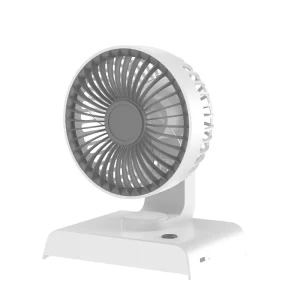
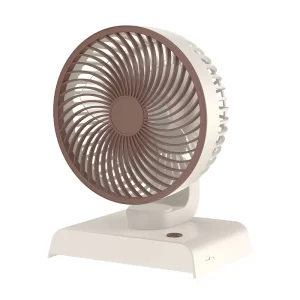
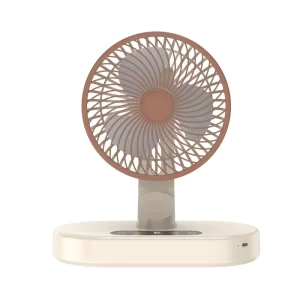
Wanjiada’s rechargeable standing fan is designed around several features that are relevant to B2B buyers, including a BLDC motor, multiple speed settings, rechargeable battery configurations, USB output, and additional user-oriented functions.
The product supports different battery capacity configurations, including 5,400mAh, 9,000mAh, and 12,000mAh, giving distributors and brands more flexibility when developing products for different retail price points.
Por exemplo:
- A standard battery configuration can target general household retail.
- A higher-capacity configuration can target extended-runtime applications.
- A feature-rich configuration can be positioned for outdoor, backup, or premium private-label markets.
Wanjiada also provides OEM/ODM support, allowing B2B customers to develop product appearance, functions, colors, and packaging according to project requirements.
A Practical Checklist for Retail Buyers
Before selecting a rechargeable fan, evaluate the product using this checklist:
Market
- Who is the target customer?
- What is the main use scenario?
- What retail price is acceptable?
Product
- Is the fan type suitable?
- Is the battery capacity appropriate?
- What is the actual runtime?
- What motor is used?
- Is the airflow sufficient?
- Is the noise level acceptable?
Features
- Speed settings
- Oscillation
- USB output
- Adjustable height
- Adjustable angle
- Charging method
Supplier
- OEM/ODM capability
- MOQ
- Lead time
- Certifications
- Quality control
- Sample support
- Personalização de embalagens
- Long-term production capacity
This process helps retailers select products based on commercial requirements rather than simply comparing supplier quotations.
Conclusão
Choosing the right rechargeable fan for retail markets requires more than selecting the fan with the largest battery or the longest list of features.
B2B buyers should first define their target customer and application, then match the fan type, battery capacity, motor, airflow, features, price, and supplier capabilities to that market.
For general retail, a balanced configuration can provide a strong combination of performance and price. For outdoor, camping, and power-outage markets, longer battery runtime may be more important. For private-label brands, OEM/ODM flexibility can create additional opportunities for differentiation.
The most competitive rechargeable fan is therefore not necessarily the one with the most specifications. It is the one whose configuration matches the customer, retail price, and market demand.