AR
AR  EN
EN  ZH
ZH  FR
FR  DE
DE  RU
RU  ES
ES  PT
PT  JA
JA 
Battery capacity is one of the most important specifications when sourcing a rechargeable standing fan for wholesale or private-label sales. A larger battery does not automatically mean a better product. The right capacity depends on the motor, power consumption, expected runtime, charging requirements, product weight, target price, and intended market.
For importers, distributors, retailers, and private-label brands, choosing the right battery configuration can directly affect product positioning, retail price, shipping requirements, and customer satisfaction.
So, what battery capacity is best for a rechargeable standing fan?
The answer is: the capacity that provides the required runtime without adding unnecessary cost, weight, or charging time.
Why Battery Capacity Matters for Wholesale Buyers
Battery capacity is normally measured in milliamp-hours (mAh). In simple terms, a higher mAh rating generally means the battery can store more electrical charge.
However, mAh alone does not determine how long a fan will operate.
Actual runtime is also affected by:
- Motor efficiency
- Fan speed
- Blade design
- Power consumption
- Control system
- Battery voltage
- Battery condition
- Operating environment
For example, a high-efficiency BLDC motor can deliver longer operation from the same battery capacity than a less efficient motor.
This means B2B buyers should avoid evaluating rechargeable standing fans only by comparing numbers such as 5,000mAh, 9,000mAh, or 12,000mAh.
Instead, ask the supplier to provide battery capacity together with rated power and tested runtime at different speed settings.
What Battery Capacity Is Suitable for a Rechargeable Standing Fan?
There is no universal battery capacity that works for every market. In the broader rechargeable fan market, configurations commonly range from several thousand mAh to more than 10,000mAh, with the appropriate choice depending heavily on product size and use case.
For a standing fan, buyers can use the following framework when planning different product configurations.
1. Around 4,000–5,000mAh: Entry-Level Configuration
A lower-capacity battery can work for buyers targeting:
- Short-duration household use
- Budget retail channels
- Basic rechargeable fan products
- Markets where price is the main purchasing factor
- Customers who have frequent access to mains electricity
The main advantage is a lower product cost and potentially lighter construction.
However, a smaller battery may not be suitable when the product is promoted as a long-runtime backup fan.
For B2B buyers, this configuration is best positioned as an entry-level rechargeable standing fan, rather than a premium long-runtime product.
2. Around 5,000–8,000mAh: Balanced Retail Configuration
A mid-range battery configuration can provide a better balance between:
- Runtime
- Product cost
- الوزن
- Portability
- Retail positioning
This range is useful for general-purpose rechargeable fans intended for homes, shops, offices, and occasional outdoor use.
Industry sourcing guides also identify the mid-capacity range as a common configuration for general retail products because it balances performance and cost.
For distributors that want one SKU to serve several customer groups, a mid-range battery can be a practical starting point.
3. 9,000–12,000mAh: Long-Runtime Positioning
Higher-capacity configurations are more suitable when the product’s selling point is extended battery operation.
Potential applications include:
- Power-outage backup
- Outdoor use
- Camping
- Off-grid environments
- Markets with unstable electricity
- Long operating periods
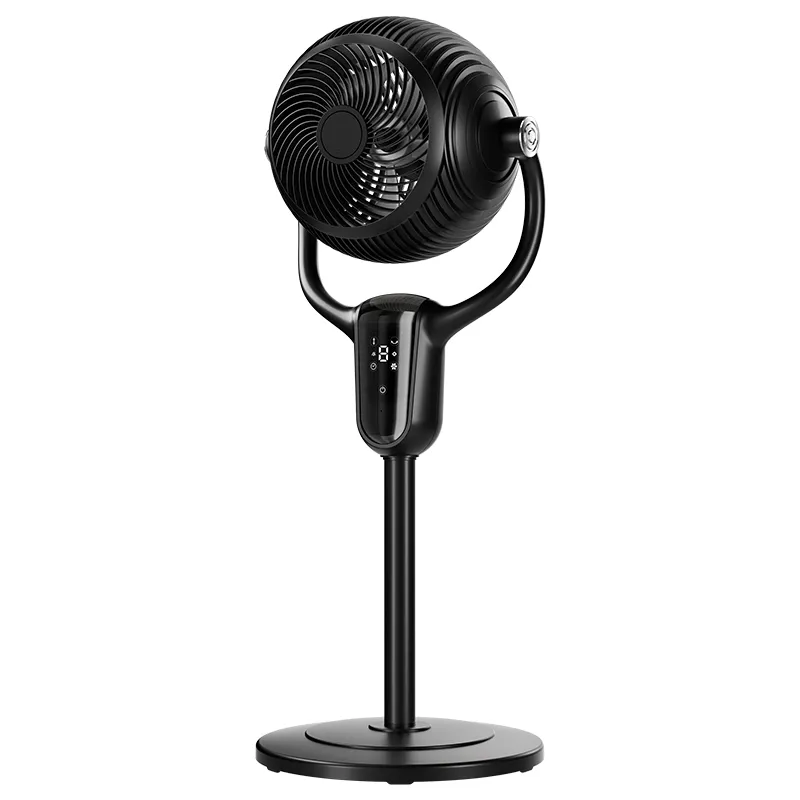
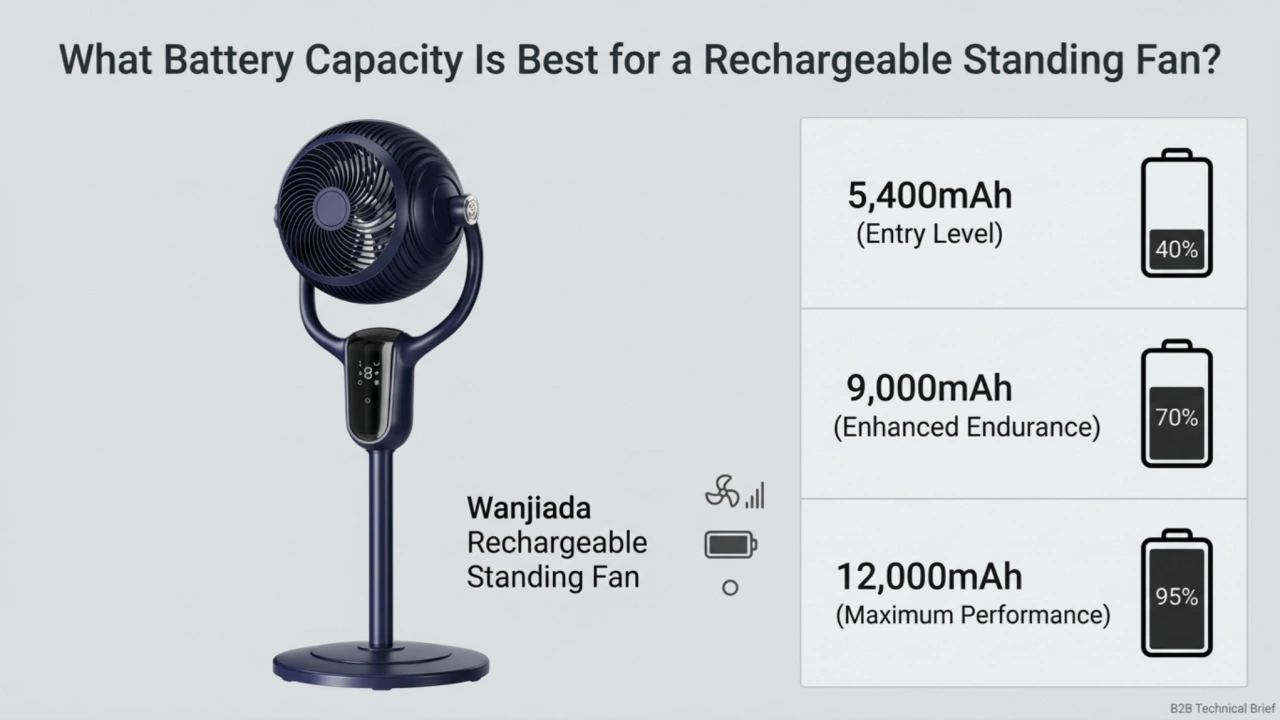
Wanjiada’s rechargeable standing fan can be configured with different battery capacities, including 5,400mAh, 9,000mAh, and 12,000mAh options, allowing buyers to match the product configuration with their target market.
For a private-label brand, offering different battery configurations can also create a product ladder:
Standard → Extended Runtime → Premium Long Runtime
This can help a brand serve different retail price points without completely changing the product platform.
Battery Capacity vs. Runtime: What Buyers Should Actually Compare
A common sourcing mistake is asking:
“How many hours can this fan run?”
without specifying the fan speed.
A rechargeable standing fan can consume very different amounts of power at low, medium, and high speed.
Therefore, suppliers should ideally provide a runtime table such as:
| Fan Speed | استهلاك الطاقة | Expected Runtime |
|---|---|---|
| منخفضة | Lower | Longest |
| متوسط | Moderate | Moderate |
| عالية | أعلى | Shortest |
This information is much more useful than a single maximum-runtime claim.
When comparing two suppliers, ask both companies to provide runtime under the same operating conditions.
This makes it easier to identify whether a larger battery actually provides better value.
Does a Larger Battery Always Mean Better Performance?
No.
A larger battery can increase runtime, but it can also increase:
- Product weight
- Battery cost
- Charging time
- Shipping considerations
- حجم المنتج
- Retail price
For this reason, B2B buyers should consider the complete product configuration.
For example, a distributor selling affordable household fans may not benefit from a very high-capacity battery if customers primarily use the fan near a power outlet.
In contrast, a retailer targeting camping, emergency preparedness, or power-outage markets may be able to justify a higher-capacity configuration.
The right question is therefore not:
“What is the biggest battery available?”
It is:
“What battery capacity provides enough runtime for my target customer at an acceptable retail price?”
How Motor Efficiency Affects Battery Selection
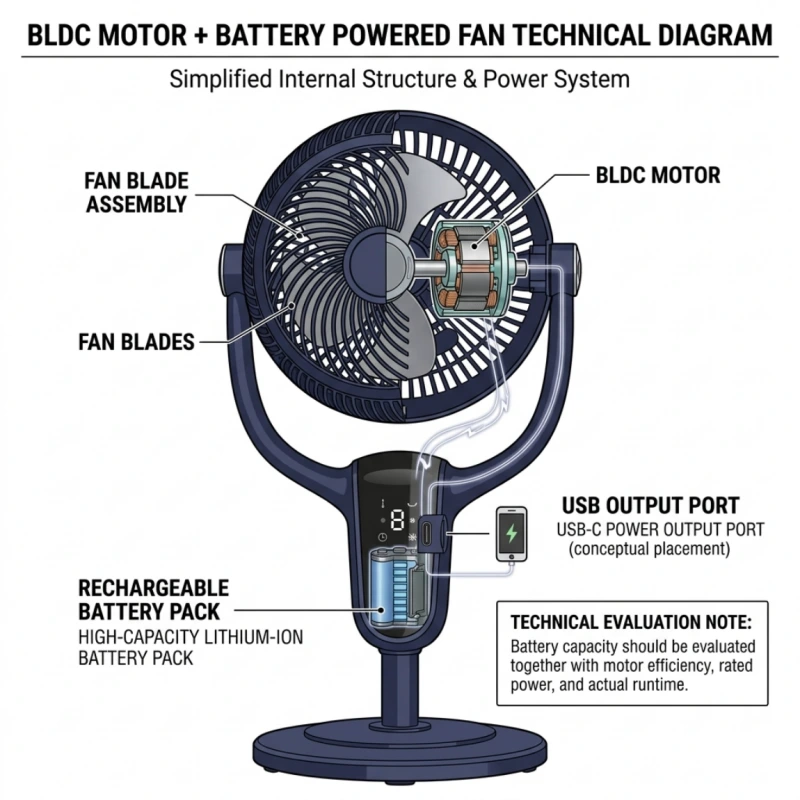
Battery capacity should always be evaluated together with motor technology.
A more efficient motor can reduce energy consumption while maintaining useful airflow.
Wanjiada’s rechargeable standing fan uses a BLDC motor, which is designed to provide efficient and relatively quiet operation. BLDC technology is increasingly used in higher-value fan products because motor efficiency can contribute to longer operating time and better energy performance.
For B2B sourcing, this means buyers should compare:
Battery Capacity + Motor Type + Rated Power + Airflow + Runtime
rather than battery capacity alone.
A 12,000mAh fan with inefficient power consumption may not necessarily outperform a lower-capacity fan with a more efficient motor.
How to Choose Battery Capacity by Market
Different markets can require different configurations.
For General Household Retail
A balanced battery configuration can be sufficient when customers primarily need several hours of cordless operation.
The priority should be:
- Reasonable runtime
- Competitive retail price
- Reliable charging
- Stable airflow
- Easy operation
For Power-Outage Markets
Higher battery capacity becomes more valuable when customers need cooling during electricity interruptions.
Buyers should prioritize:
- Long runtime
- Battery safety
- Reliable charging
- Battery protection
- Clear runtime specifications
For Outdoor and Camping Markets
Portability becomes equally important.
A larger battery can increase runtime, but excessive weight can reduce product convenience.
The ideal configuration therefore balances:
Runtime + Weight + Portability + Airflow
For Premium Private-Label Brands
Premium buyers may be more interested in a combination of:
- BLDC motor
- Higher battery capacity
- Multiple speed settings
- USB output
- Quiet operation
- Modern design
- Custom packaging
In this case, battery capacity becomes part of the overall product proposition rather than a standalone specification.
What Should Wholesale Buyers Ask a Rechargeable Fan Supplier?
Before placing a bulk order, ask the manufacturer:
- What battery capacities are available?
- What is the battery voltage and cell configuration?
- What is the actual runtime at low, medium, and high speeds?
- What motor does the fan use?
- What is the rated power?
- How long does the battery take to charge?
- What battery protection functions are included?
- Can the battery configuration be customized?
- Can the supplier provide test reports and certification documents?
- Can different battery capacities be developed for different markets?
Battery safety and compliance should be treated as part of supplier evaluation rather than an afterthought. Buyers sourcing rechargeable products should also verify the applicable battery testing and transportation requirements for their destination market.
How Wanjiada Supports Different Rechargeable Fan Configurations
For wholesalers, distributors, and private-label brands, one fixed configuration may not fit every market.
وانجيادا provides rechargeable standing fan solutions with different battery capacity options, allowing buyers to select configurations according to their target retail market and application.
The product combines a rechargeable battery system with a BLDC motor, multiple speed settings, and additional functions such as USB output, giving buyers more flexibility when developing a market-specific SKU.
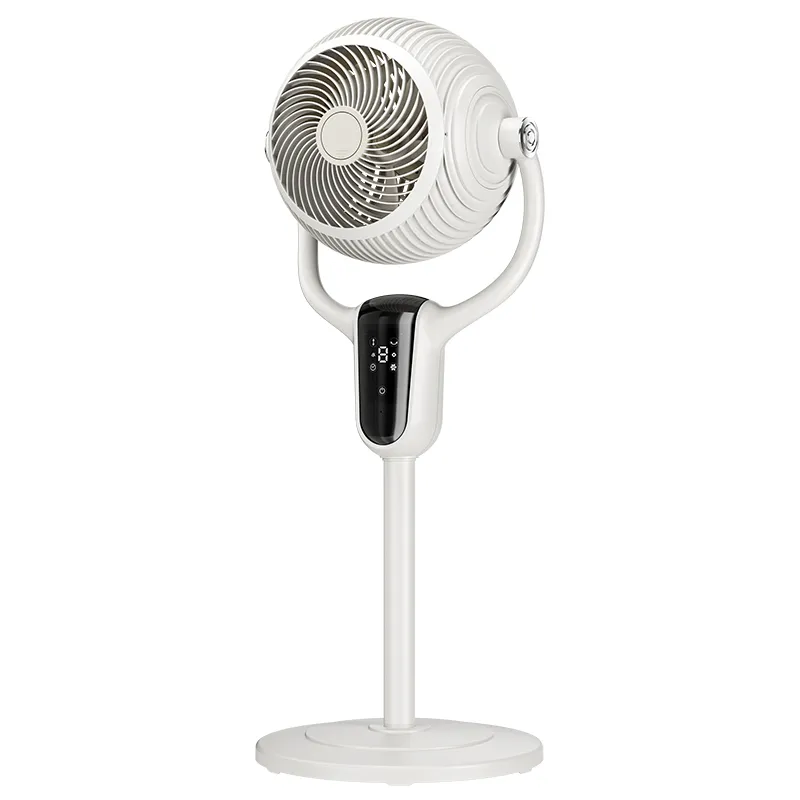
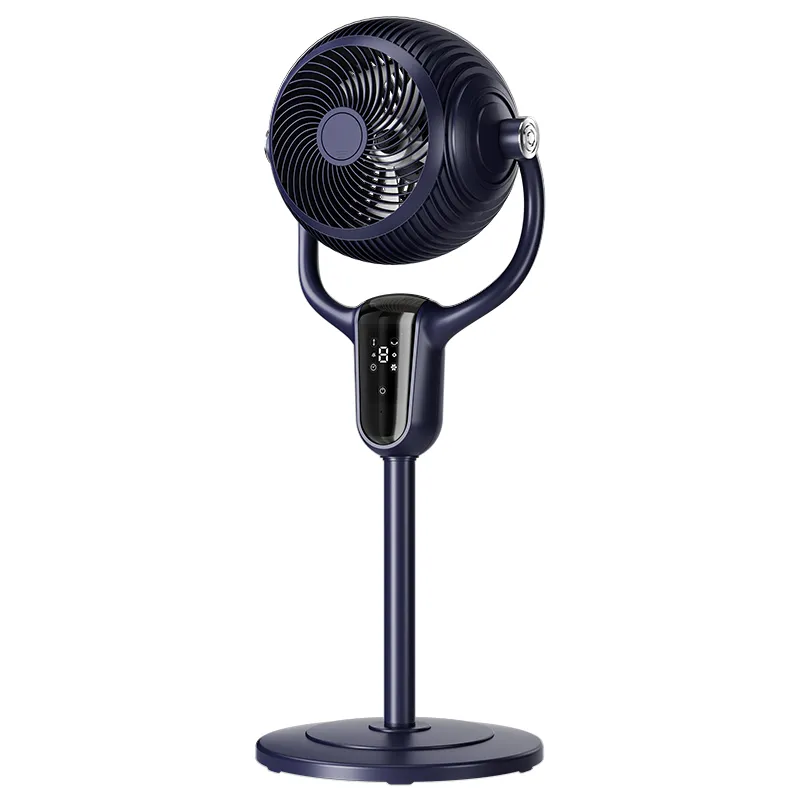
For brands that need more than a standard product, التعاون في تصنيع المعدات الأصلية/التصنيع حسب الطلب can also be used to adjust product appearance, functions, colors, and packaging according to project requirements.

الخاتمة
The best battery capacity for a rechargeable standing fan is not necessarily the largest one.
For B2B buyers, the right configuration should be determined by target runtime, motor efficiency, use scenario, retail price, product weight, and customer expectations.
A lower-capacity battery may work well for price-sensitive retail markets, while higher-capacity configurations are more suitable for power-outage, outdoor, camping, and long-runtime applications.
Before ordering, compare battery capacity with actual runtime and motor performance, and ask the supplier for test data rather than relying on the mAh number alone.
If you are sourcing rechargeable standing fans for wholesale or private-label sales, choosing the right battery configuration at the product-development stage can help create a more competitive SKU and reduce the risk of customer complaints after launch.
الأسئلة الشائعة
What battery capacity is best for a rechargeable standing fan?
There is no single best capacity. General retail products can use mid-range capacities, while power-outage, outdoor, and long-runtime products may benefit from higher-capacity batteries.
Does a higher mAh battery make a fan run longer?
Generally, a higher-capacity battery can provide longer runtime, but actual operating time also depends on motor efficiency, fan speed, rated power, and other electrical factors.
Is 12,000mAh enough for a rechargeable standing fan?
12,000mAh can be suitable for a long-runtime standing fan, but buyers should evaluate the capacity together with the fan’s voltage, power consumption, motor efficiency, and tested runtime.
Can rechargeable standing fan battery capacity be customized?
Battery configuration can be customized for some OEM/ODM projects, depending on the product platform, battery system, safety requirements, and target market.
What should wholesalers check besides battery capacity?
Wholesalers should also evaluate motor type, rated power, airflow, runtime at different speeds, charging time, battery safety, certifications, packaging, MOQ, and supplier production capabilities.